JARDINS PAVILION – NEOCLASSICAL HARMONY AND A DISCREET LIGHTING NARRATIVE
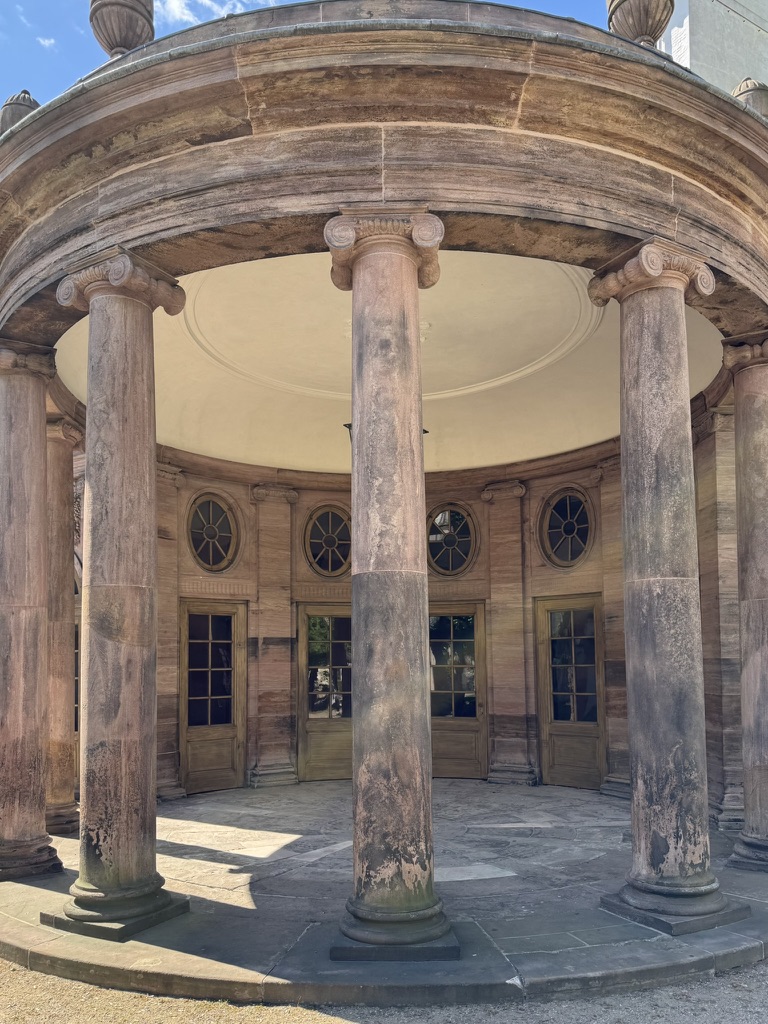
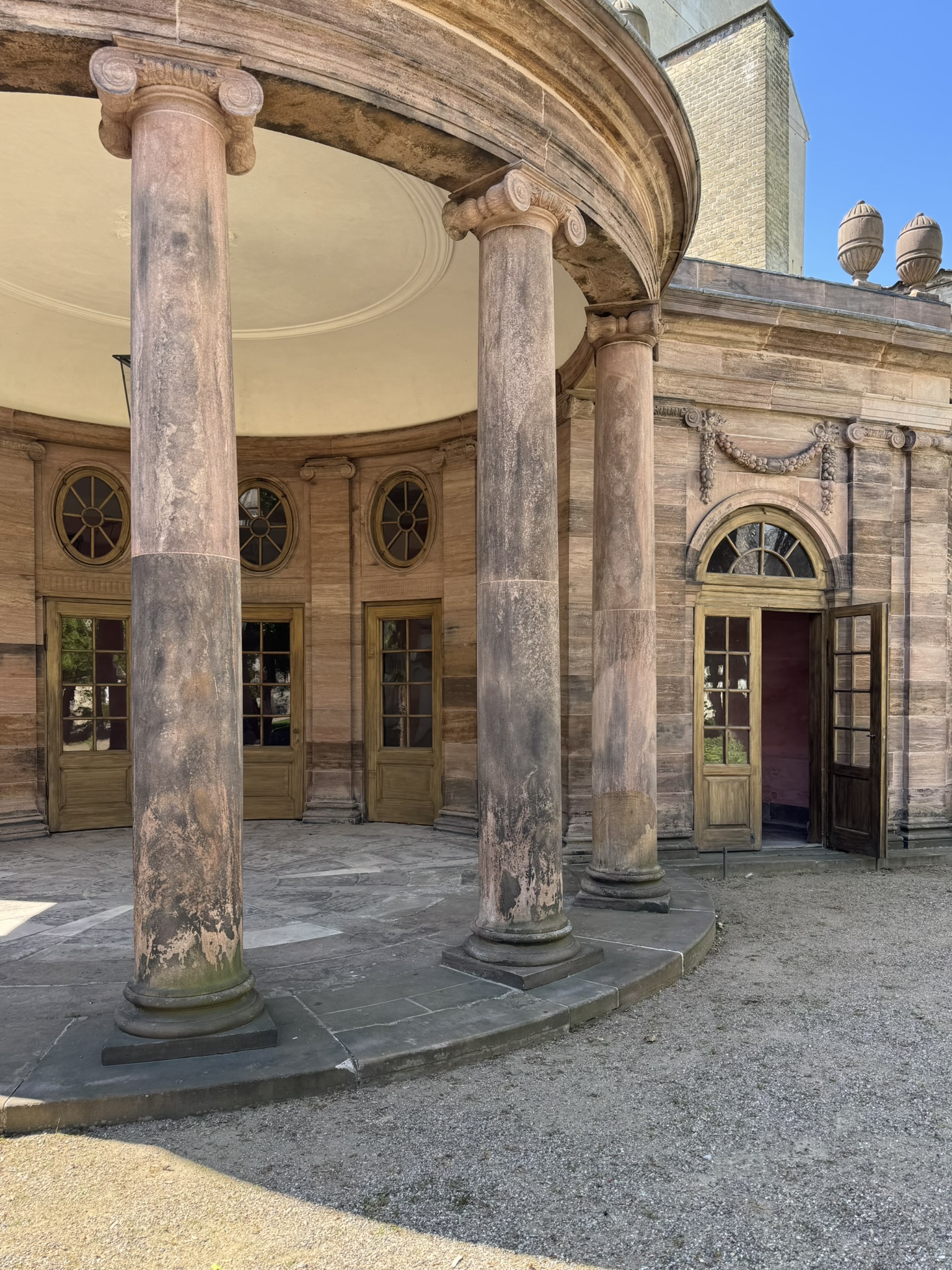
On 31 October 2023, Jardins Pavilion – built in 1763, named after the architect Nicolas-Henri Jardin and beautifully situated behind Christian VII’s Palace – was reopened after a comprehensive restoration. The pavilion is located in the furthest corner of Amalienborg’s simple and elegant garden layout, and it is precisely this discreet position that lends the visit an almost meditative calm. Here, the layers of history and the poetic presence of the architecture can be sensed.
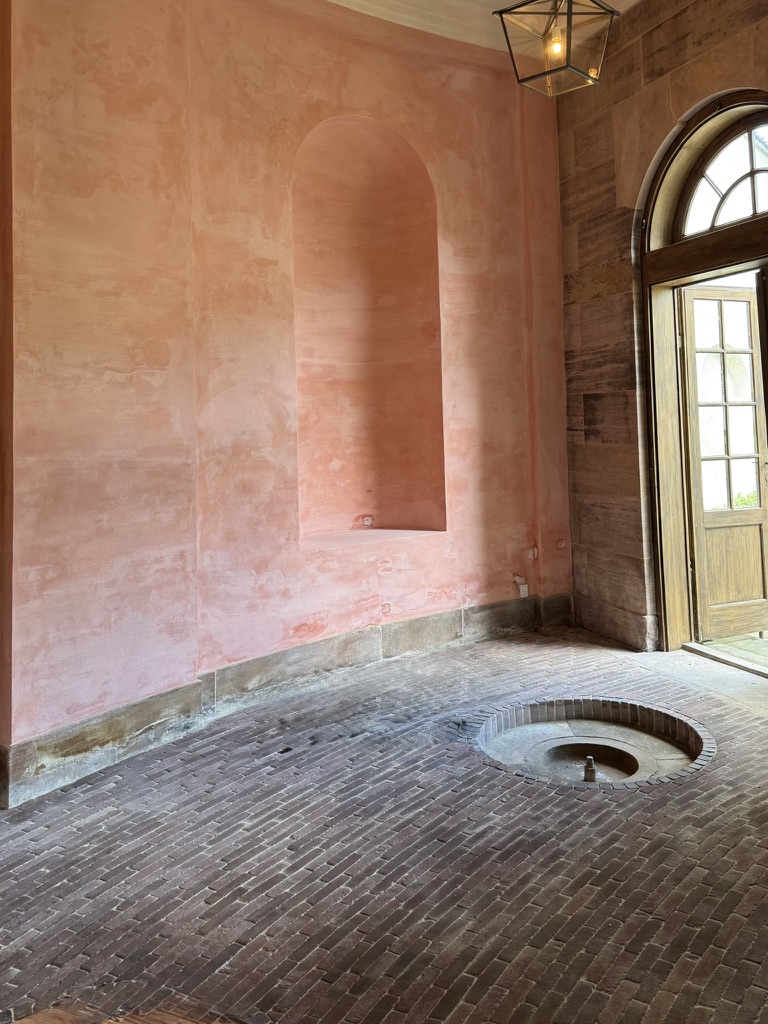
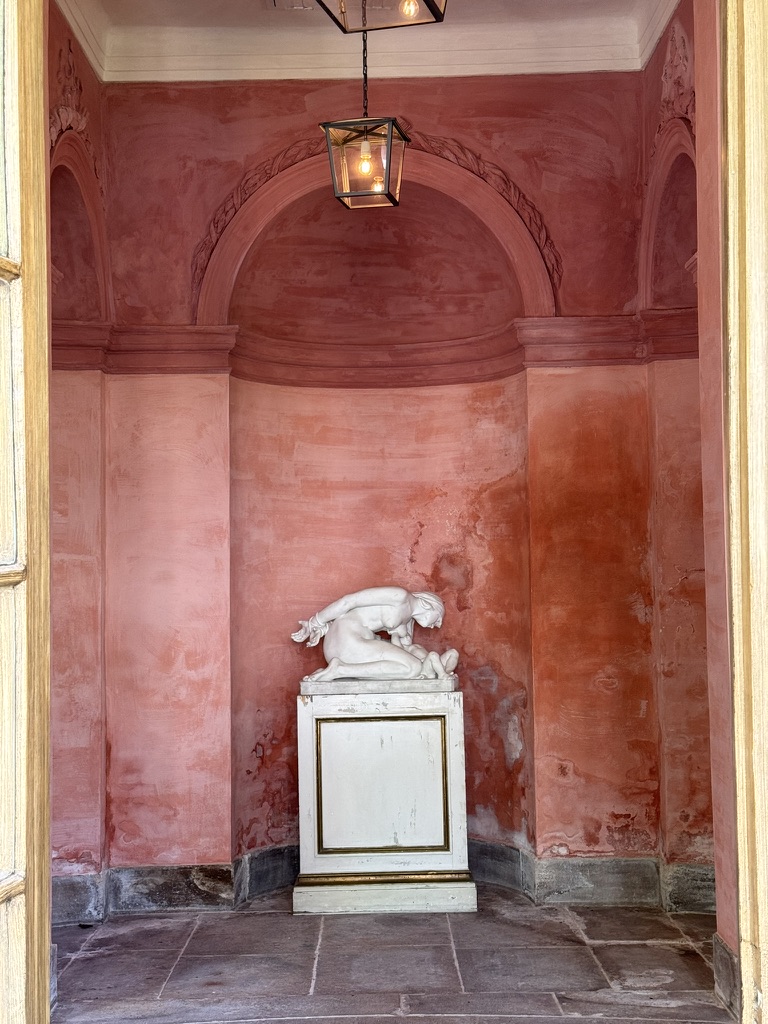
The pavilion was originally built as a garden pavilion and tea salon, with a central room for sitting and aviaries on either side. Designed in the neoclassical style, it was divided into three sections: two interior bird aviaries and a central room from which the birds could be observed in their setting. In the niches of the rear wall, the birds perched on small rods, while fountains in the aviaries created a visual and sensuous experience. During the restoration, these fountains were rediscovered when a later concrete floor on one side was removed. They have now been reconstructed – though without a water supply.
The restoration, carried out under the direction of Rønnow Arkitekter, is based on Nicolas-Henri Jardin’s original drawings and archive material, supplemented by thorough paint-archaeological investigations.
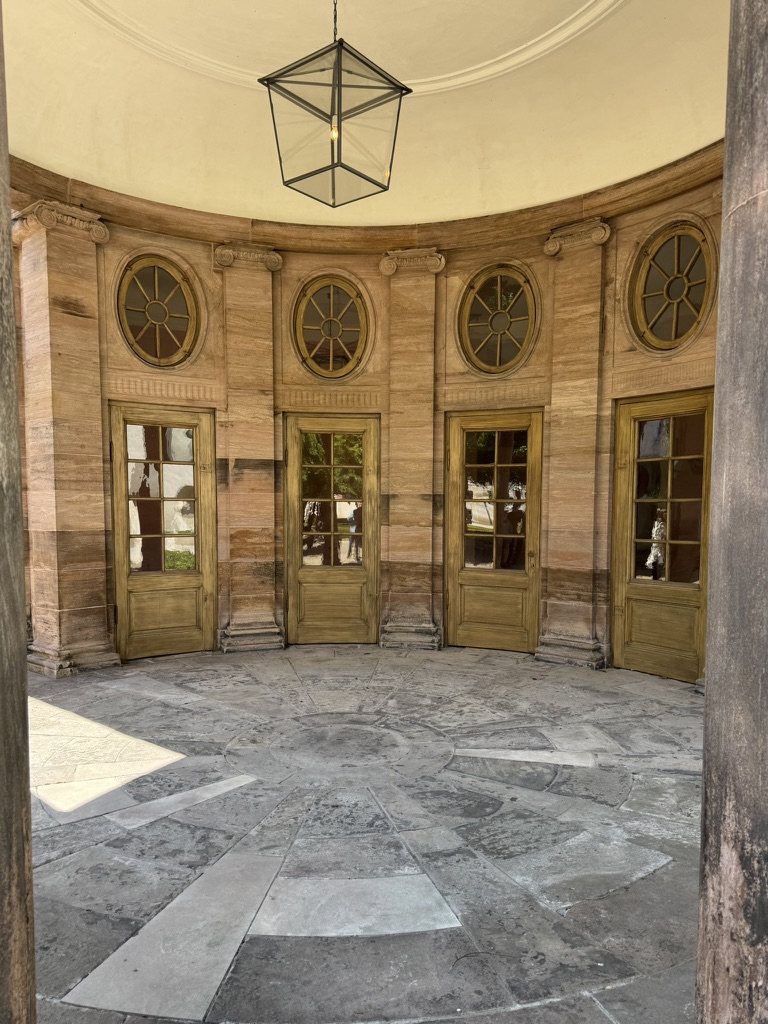
The original rose-coloured wall finish has been reinstated, the floor has been reconstructed in brick, and the doors and window frames have been given a wood-grained paint finish that harmonises beautifully with the pavilion’s overall materiality.
The building is shaped as a small circular temple, constructed in Nexø sandstone and crowned by a copper dome. Based on an old copper engraving of the pavilion, the dome has now been completed with a wreath of laurel leaves – a motif characteristic of Nicolas-Henri Jardin.
Nicolas-Henri Jardin was invited to Denmark by Frederick V. At the Royal Danish Academy of Fine Arts, Jardin became the country’s first professor of architecture, and later head of the Danish building administration. He was among the first to introduce neoclassicism in Denmark – an architectural language that has left clear traces in the architecture of Copenhagen.
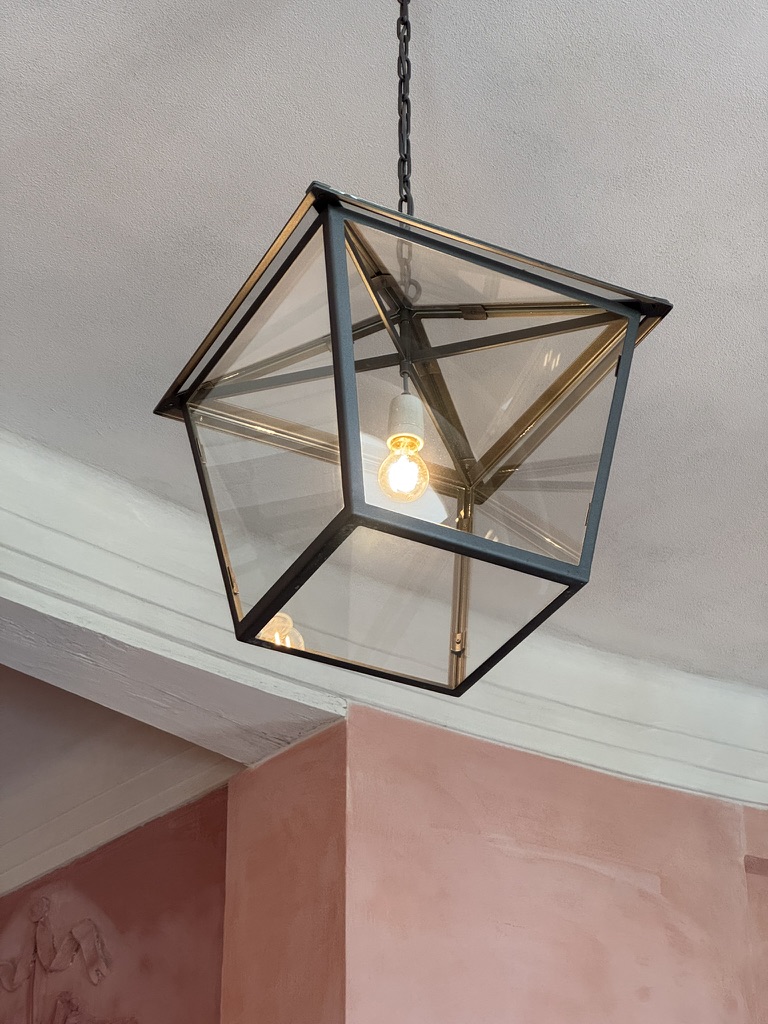
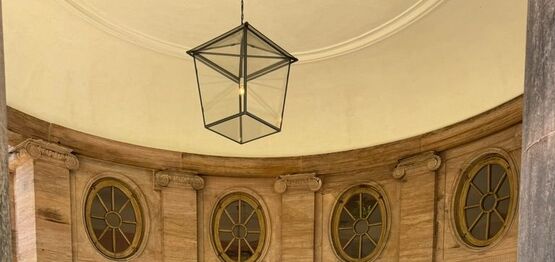
As part of the restoration, a new lighting solution was developed in collaboration with Okholm Lighting, supporting the pavilion’s neoclassical character.
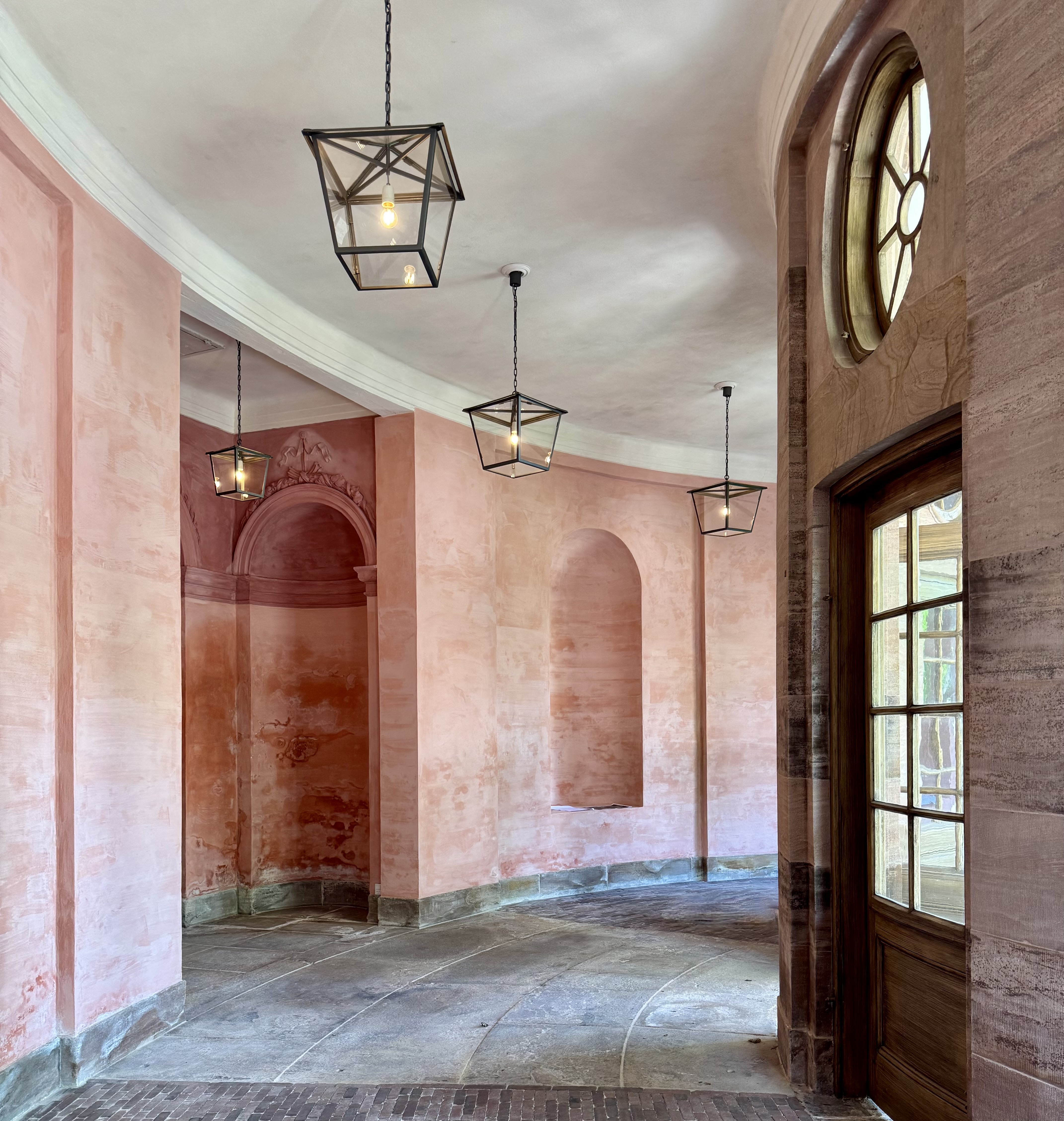
The lighting is discreet and precise – inspired by neoclassical luminaire forms with clear glass and carefully balanced proportions. Although the building was of course not electrified when it was originally built, the present lighting appears as a natural and respectful addition to the architecture.
The pendant luminaires are made in three sizes, in steel finished in Grafital 351. The largest is placed in the rotunda, the medium-sized luminaires in the aviaries and the tea salon, and the smallest in the nymphaeum. Together, they create a beautiful rhythm and a balanced distribution of light throughout the space.
Jardins Pavillon once again stands in the spirit of its original conception – carefully restored with respect for history and with a quality that can live on for many years to come.
The restoration was made possible with support from A.P. Møller og Hustru Chastine Mc-Kinney Møllers Fond til almene Formaal.
PROJECT DATA
Client: Danish Agency for Culture and Palaces
Advisor: Royal Building Inspector Rønnow Arkitekter
Engineering consultancy: Eduard Troelsgård
Main contractor: Einar Kornerup A/S
Façade cleaning: OMØ A/S
Carpentry and joinery: Kjell Pedersen Entreprise
Sheet-metal and plumbing work: Jens Volf Blikkenslager & VVS
Painting work: S.V. Fischer
Stonemasonry: Gladsaxe Ny Stenhuggeri
Stucco work: Henrik Nygaard Svensson
Lighting: Okholm Lighting
Consultancy and archaeological investigations: Museum of Copenhagen and the National Museum of Denmark
SOURCES
Rønnow Arkitekter website: Jardins Pavillon
The Danish Royal House website: Reopening of Jardins Pavillon in the gardens behind Christian VII’s Palace
Danmarks Nationalleksikon: Article on Nicolas-Henri Jardin by art historian Ulla Kjær, mag.art., dr.phil.
Arkitekten 2/2024
Photo: Okholm Lighting