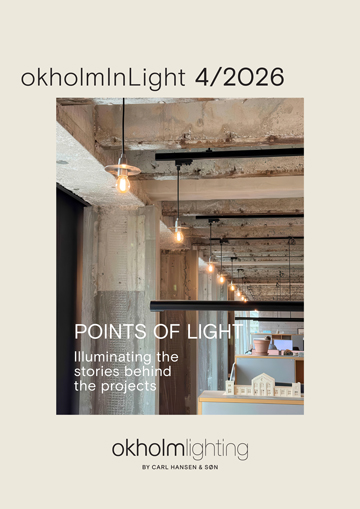
THE SCAN PENDANT - WHEN SIMPLICITY BECOMES AN ARCHITECTURAL TOOL
The elements that have the greatest impact in a space are rarely the most complex. In architecture and lighting design, quality often emerges when form is reduced to its essence and every element performs with precision, without visual noise. This is exactly where the Scan Pendant finds its strength.
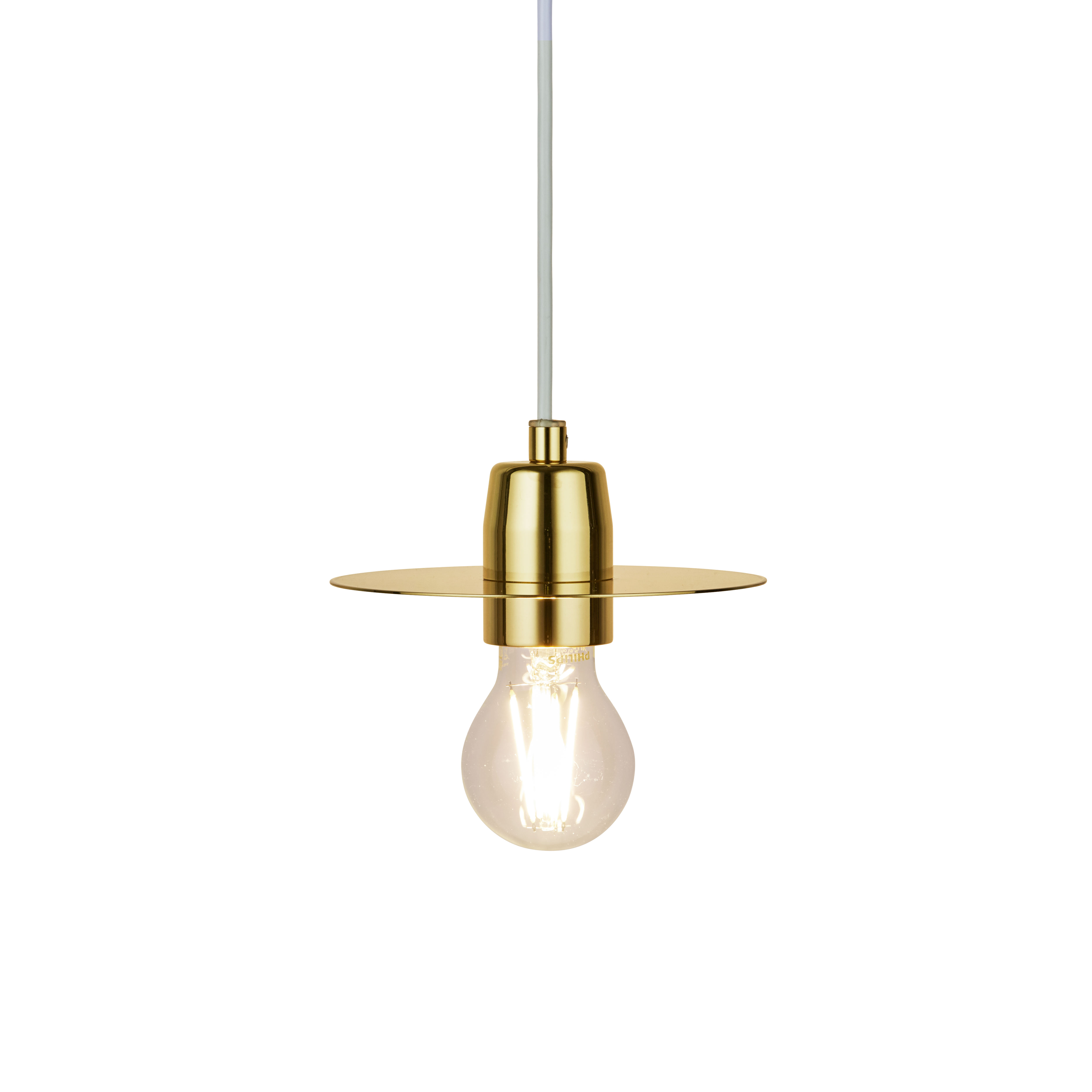
The Scan Pendant is reduced to the essentials: a cable, a lampholder, a small top shade and a light source. Nothing more. And precisely for that reason, it can do more than its size suggests. It does not draw attention away from the architecture; it supports it. It brings calm to a space while offering great freedom to work with composition, scale and atmosphere.
Designed by Robert Okholm for church projects, the Scan Pendant builds on a strong tradition of visible light sources and simple, highly effective lighting. The small top shade directs the light downwards and gives the luminaire a clear direction without compromising its visual lightness. The choice between a curved and a straight top shade also introduces a subtle but important difference in expression.
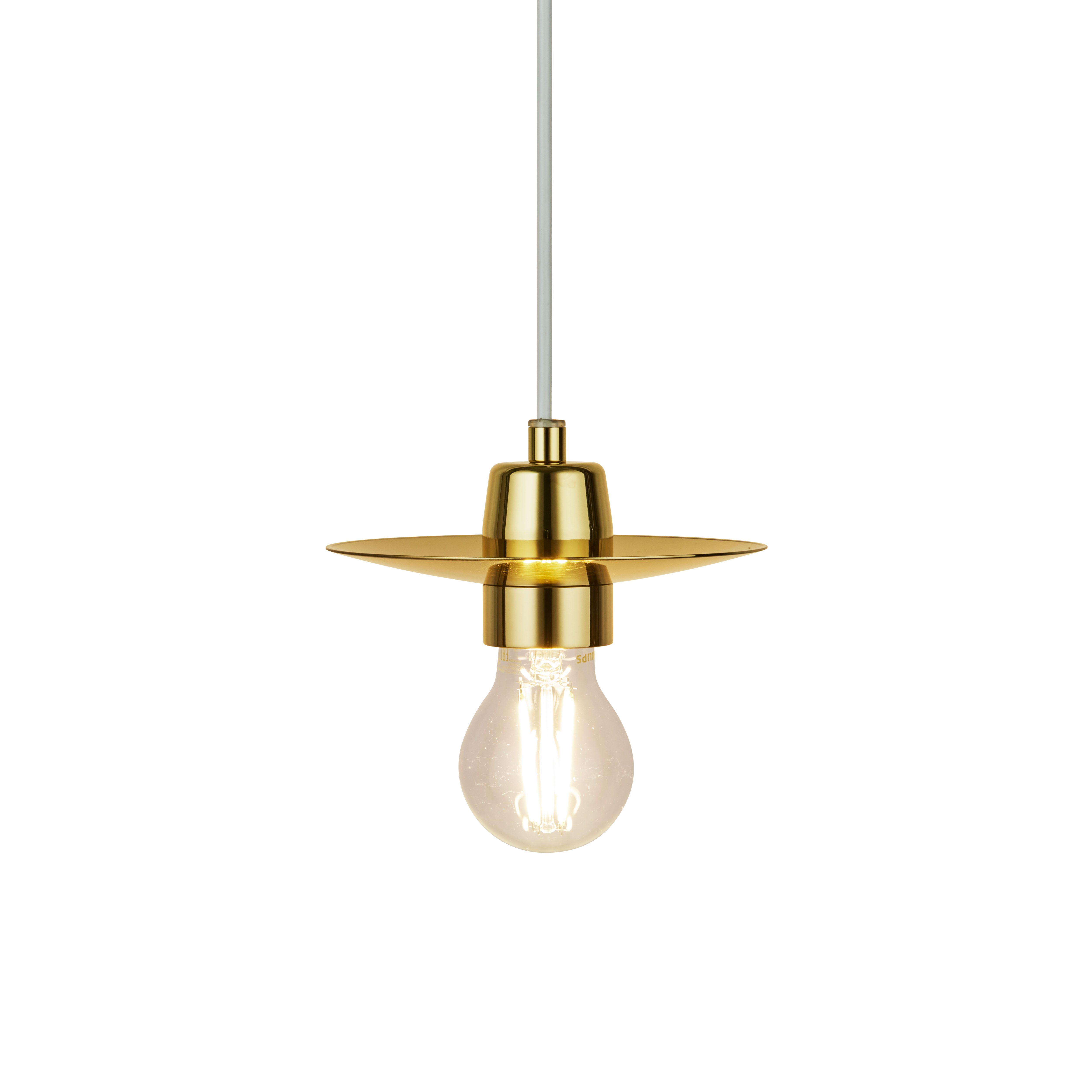
Det enkle design er ikke en begrænsning. Det er det, der gør Scan pendlen så anvendelig. Den fungerer alene, i små clustre og i store installationer, hvor den kan bruges til at skabe rytme, markere akser, understrege loftshøjder og definere zoner i rummet. Repetition er en af dens største styrker. Når det enkelte armatur er roligt og præcist, kan det gentages uden at overtegne arkitekturen. Det er her, enkelhed bliver til kreativ frihed.
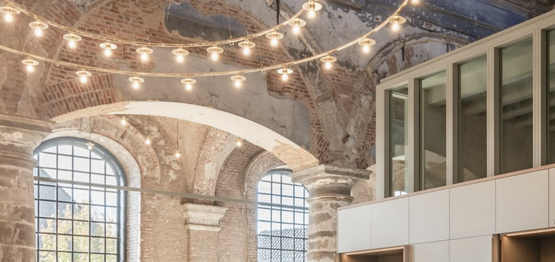
Its simplicity is not a limitation. It is what makes the Scan Pendant so versatile. It works on its own, in small clusters and in large-scale installations, where it can be used to create rhythm, define axes, emphasise ceiling heights and articulate zones within a space. Repetition is one of its greatest strengths. When the individual luminaire is calm and precise, it can be repeated without over-articulating the architecture. This is where simplicity becomes creative freedom.
Materiality plays a decisive role. In highly polished brass, the Scan Pendant takes on a precise, almost jewel-like character. In patinated brass or other finishes, the expression becomes quieter and more tactile. Because the design is so clean, materiality, proportions and craftsmanship become immediately legible. The Scan Pendant is small, but it is not anonymous. It is a finely crafted piece of lighting.
The light source is an active part of the luminaire’s identity. A clear lamp gives it maximum visual presence and a sharper, more graphic character. A frosted lamp creates a softer, more subdued atmosphere. In principle, the open construction offers maximum luminaire efficiency, because no light is lost in optical components. In return, the solution places greater demands on placement, lamp selection and glare control. That is exactly why the Scan Pendant becomes powerful in the hands of skilled architects and lighting designers.
Advances in LED lamps and lighting control have made the Scan Pendant even more relevant. With dimming and light sources offering, for example, dim-to-warm performance, it is possible to work deliberately with ambience and create lighting environments that shift from functional and precise to warm, intimate and atmospheric. This greatly expands the luminaire’s range of application without altering its fundamental idea.
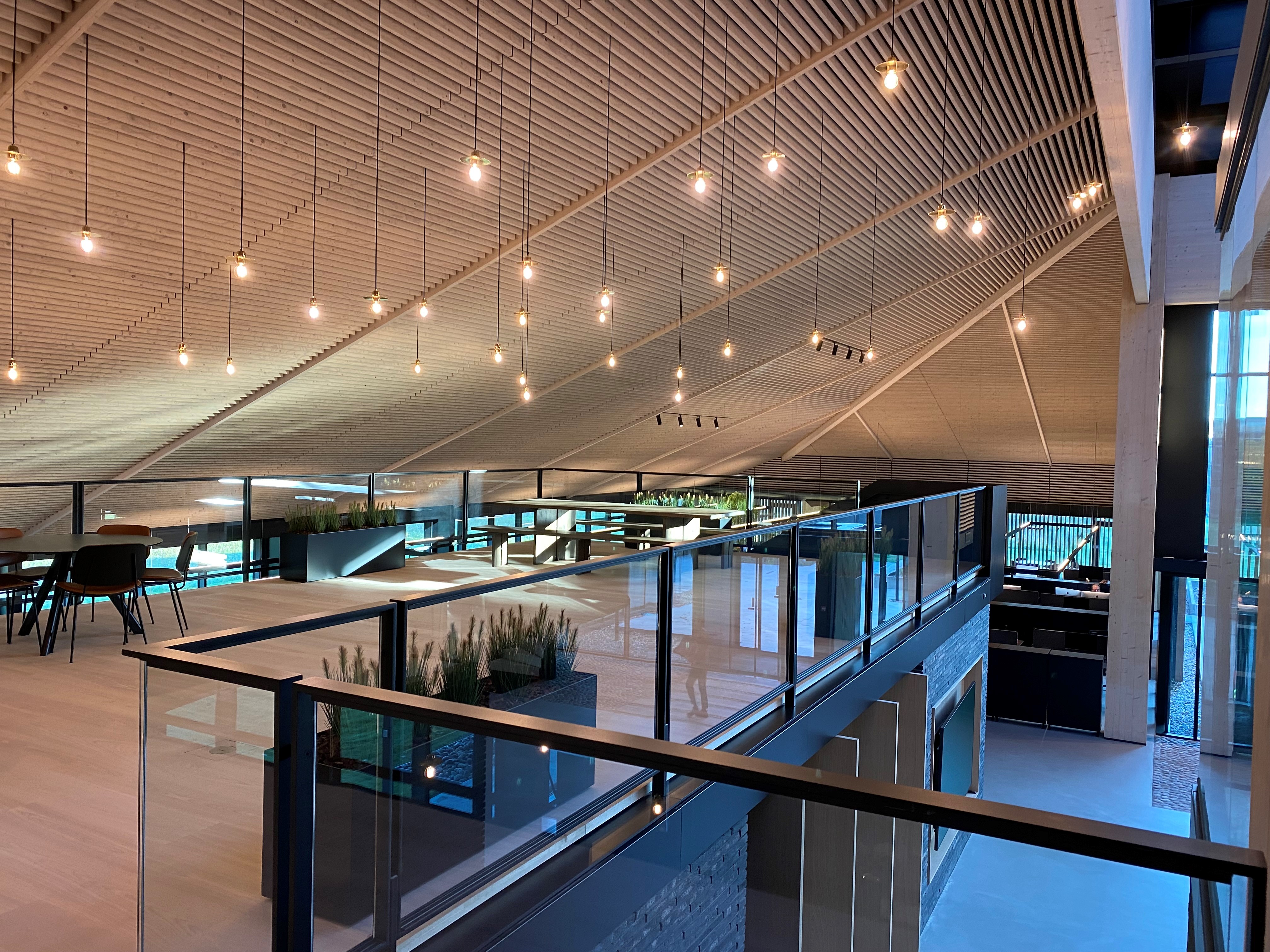
Over the years, Okholm Lighting has delivered bespoke solutions in many sizes and configurations, which underlines the strength of the Scan Pendant: it can form part of both restrained and monumental gestures. At ECCO Global Marketing, the pendant inspired the light installation Sort Sol, where light was interpreted as a dynamic, narrative element within the space.
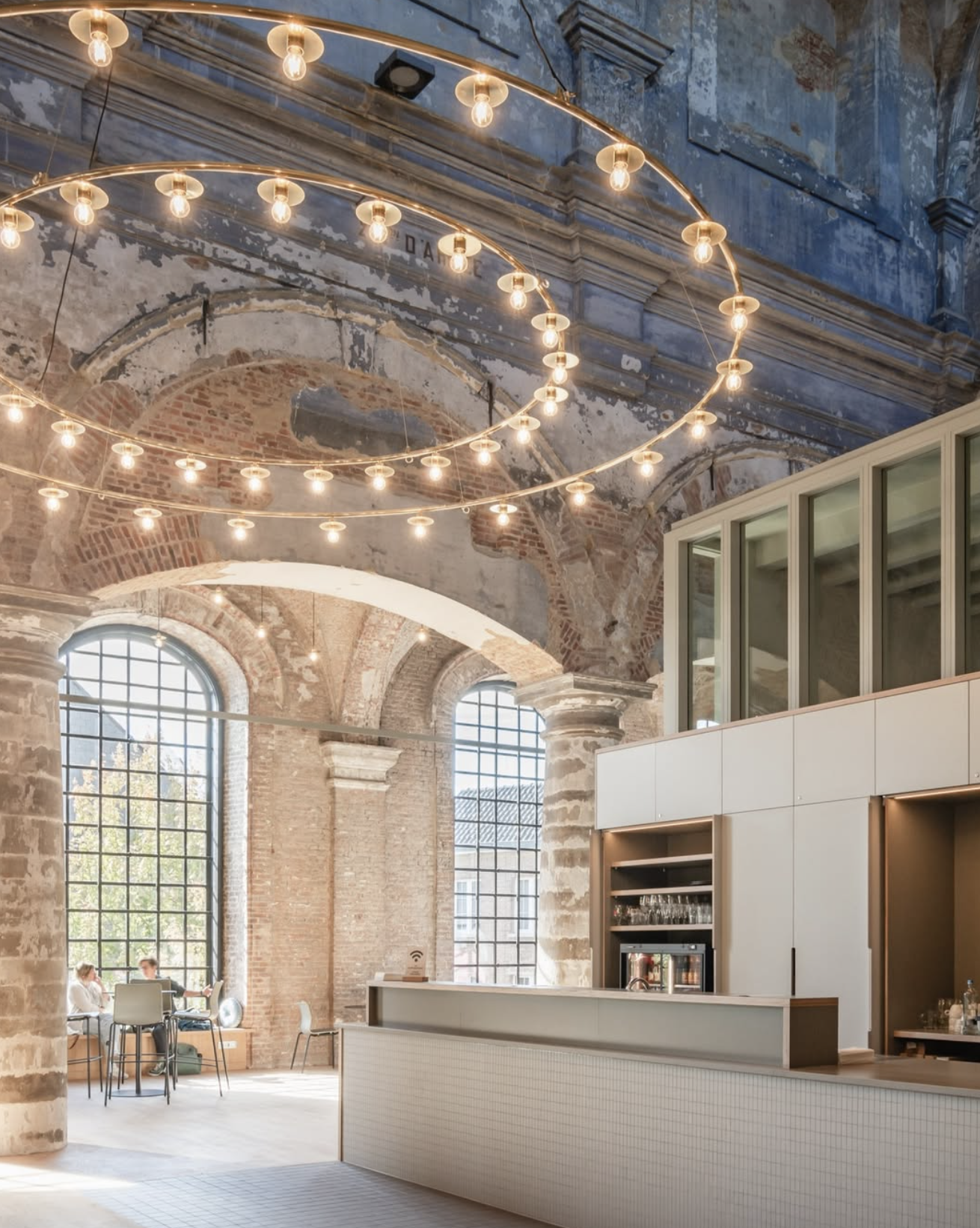
At Predikheren in Mechelen, the Scan Pendant was used as effective general lighting in the historic buildings and as part of a striking ring chandelier in the former church, where the installation forms a powerful lighting centrepiece.
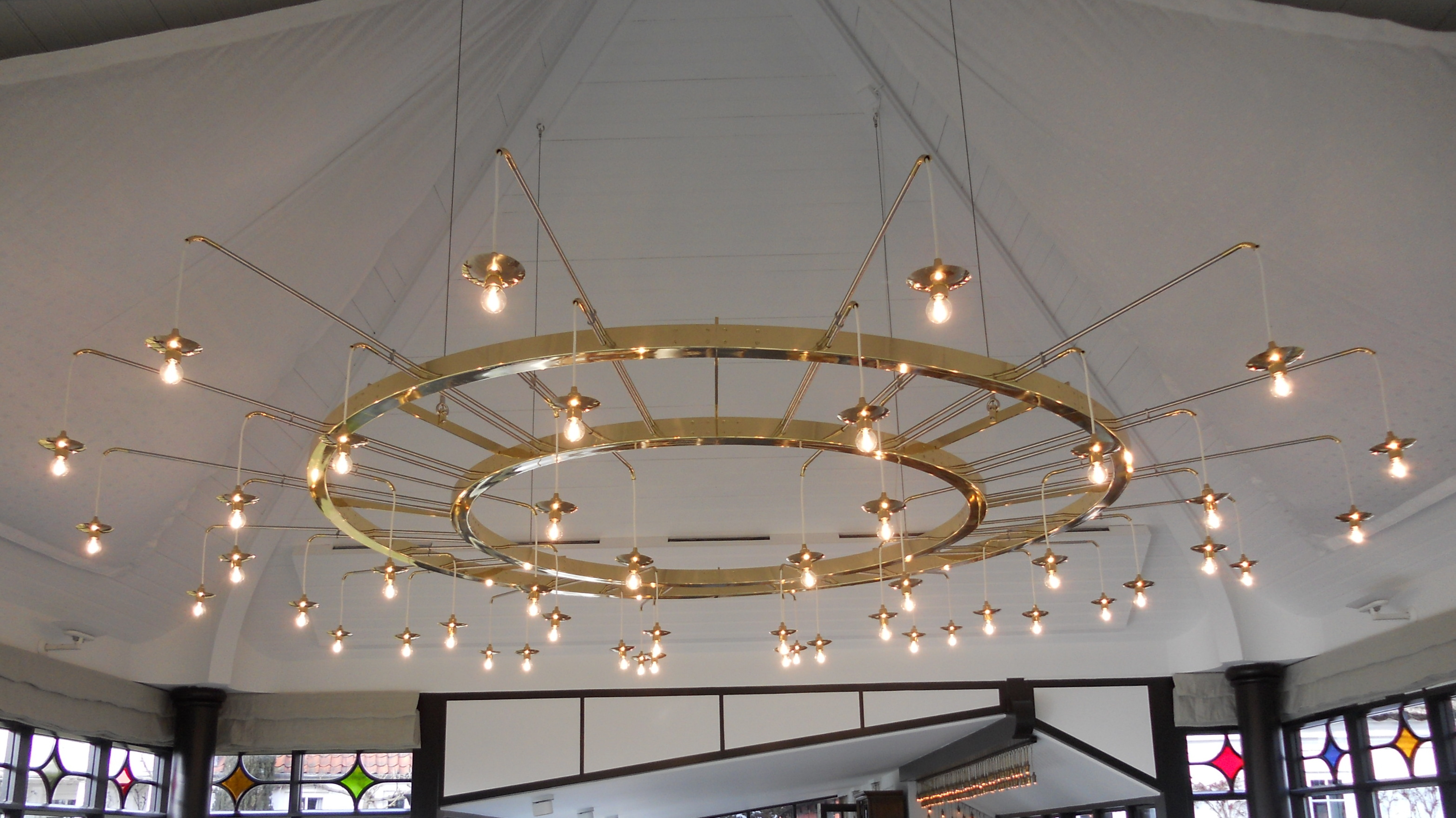
At Falsled Kro, Scan pendants define the atmosphere from the moment of arrival as part of a large, characterful ring chandelier in the entrance area.
In ecclesiastical settings, the Scan Pendant has shown a particular ability to work with both order and freedom. It can be suspended in strict geometric compositions or in freer arrangements that emphasise the height, depth and architectural character of the space. What they share is that the luminaire does not compete with the room. It reinforces it.

The Scan Pendant is clear proof that simplicity is not the same as limitation. Quite the opposite. When a luminaire is reduced to what matters, it becomes a stronger tool for architecture. It creates room for rhythm. For atmosphere. For identity. And for lighting experiences that lift a project beyond the expected.
Simplicity drives creativity.
That is precisely why the Scan Pendant remains relevant.