SKT. CLEMENS HUS IN AARHUS
Sct. Clemens Hus, Aarhus
Architects: E+N Arkitektur
The transformation of Skt. Clemens Hus on Sct. Clemens Torv in Aarhus demonstrates how a formerly inward-looking bank building can be given new life without losing either its gravitas or its history. The original structure from the 1960s clearly reflected the ideals of its time: a stringent and rational concrete building shaped by function, efficiency and institutional robustness. As a bank, the house conveyed security, control and seriousness, but also distance. It was a building that, to a large extent, turned inward.
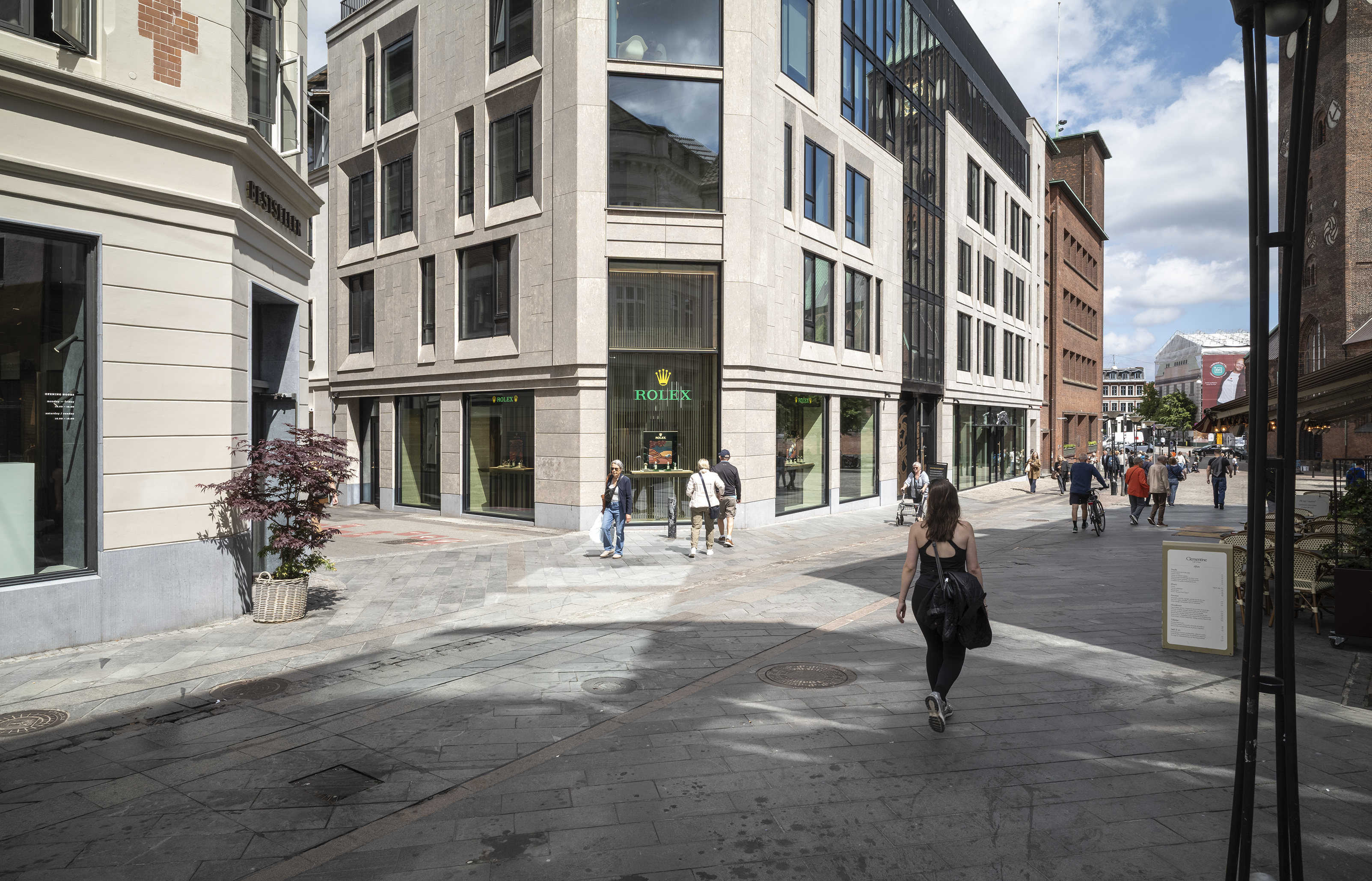
It is precisely this distance between building and city that forms the point of departure for E+N Arkitektur’s transformation. The task was not simply to renovate an existing structure, but to renegotiate its relationship with its surroundings. Where the former bank building appeared closed and uncompromising, the transformed house seeks to enter into dialogue with its setting and become a more welcoming part of urban life.
This approach follows naturally from E+N Arkitektur’s professional position. The practice operates in the tension between the existing and the new, and sees history not as a constraint but as an active point of departure for contemporary architecture. In Skt. Clemens Hus, that attitude is clearly legible. The transformation does not attempt to erase the building’s past, but to work through it so that the house can assume a new relevance in the present.
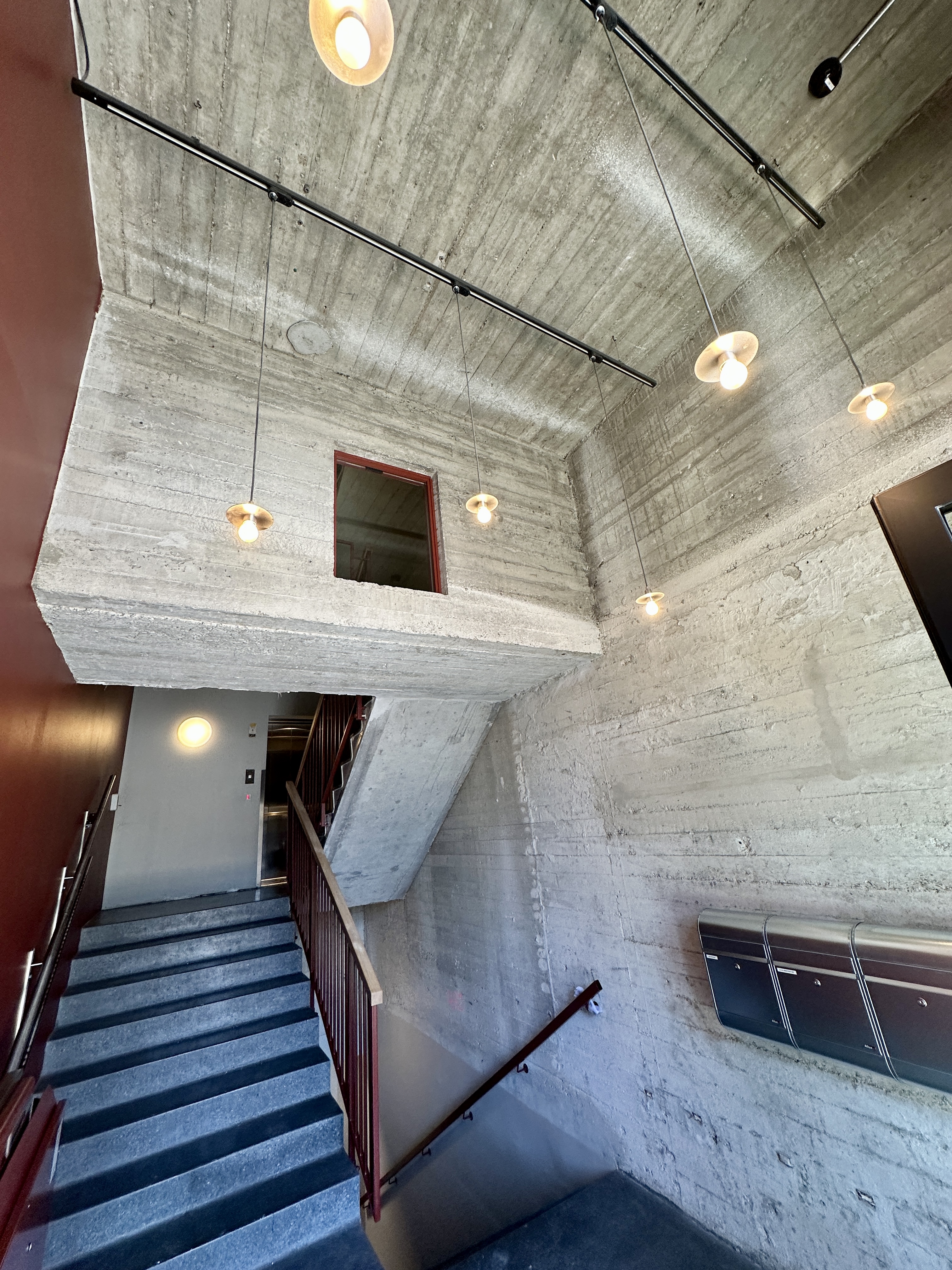
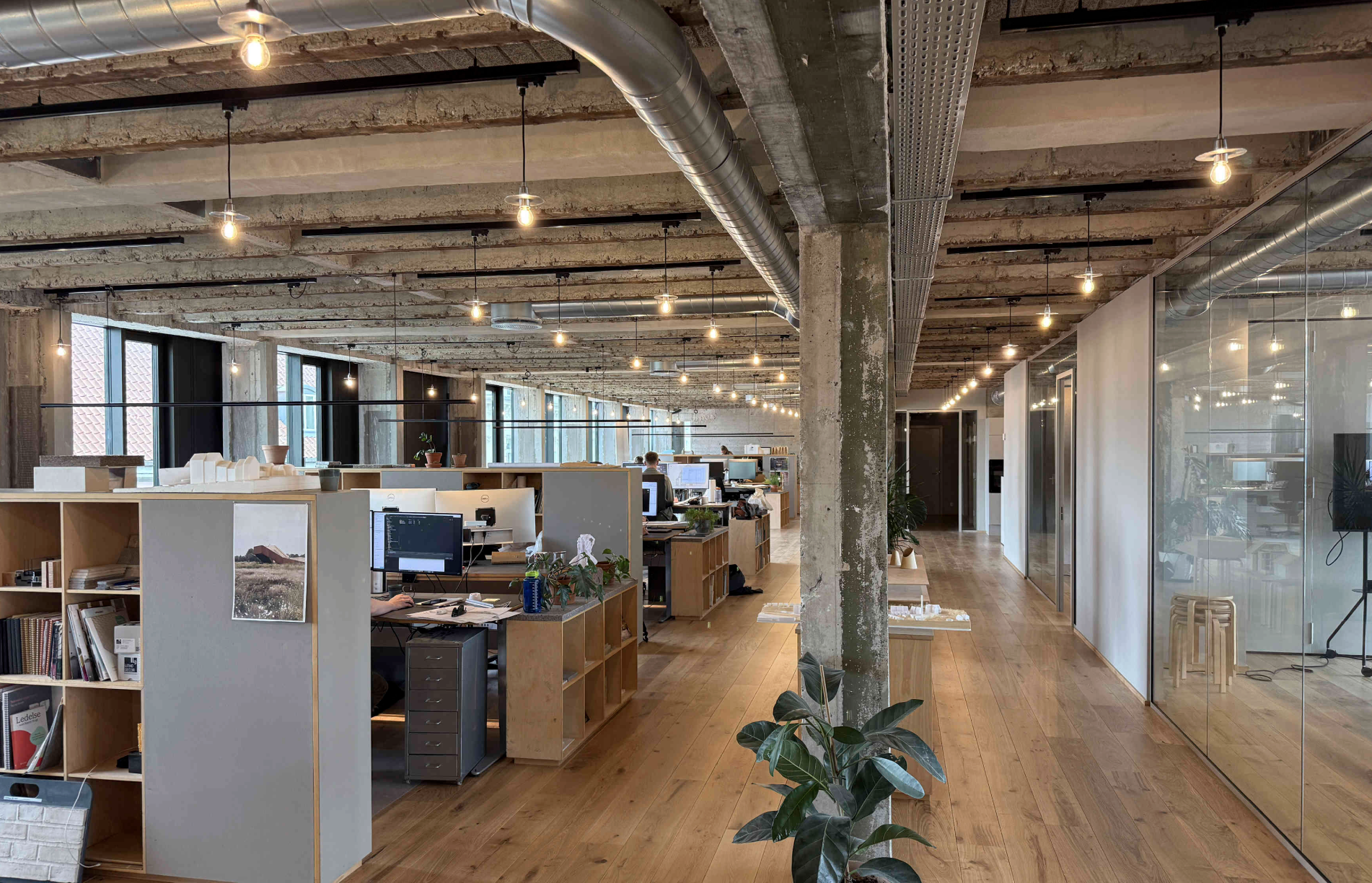
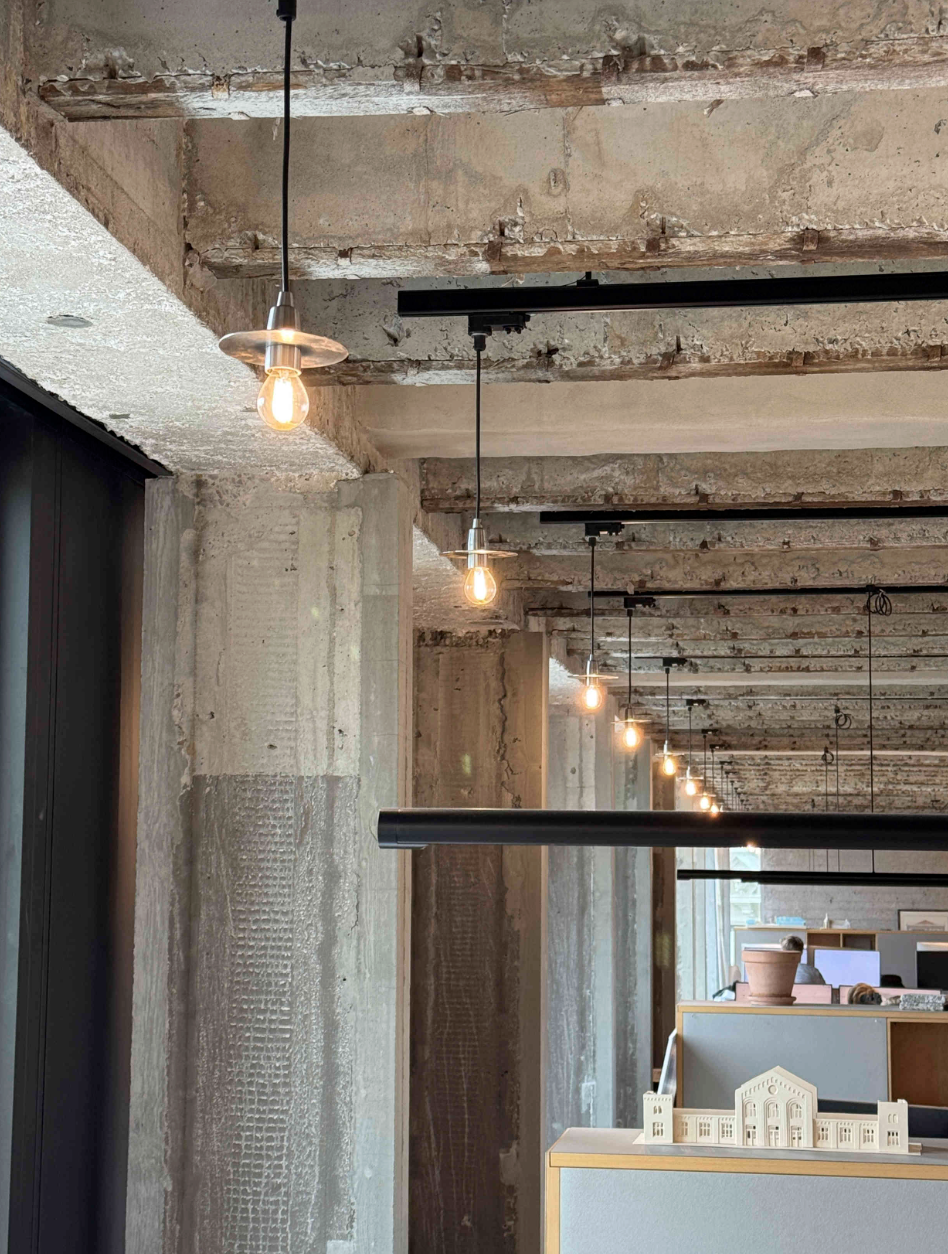
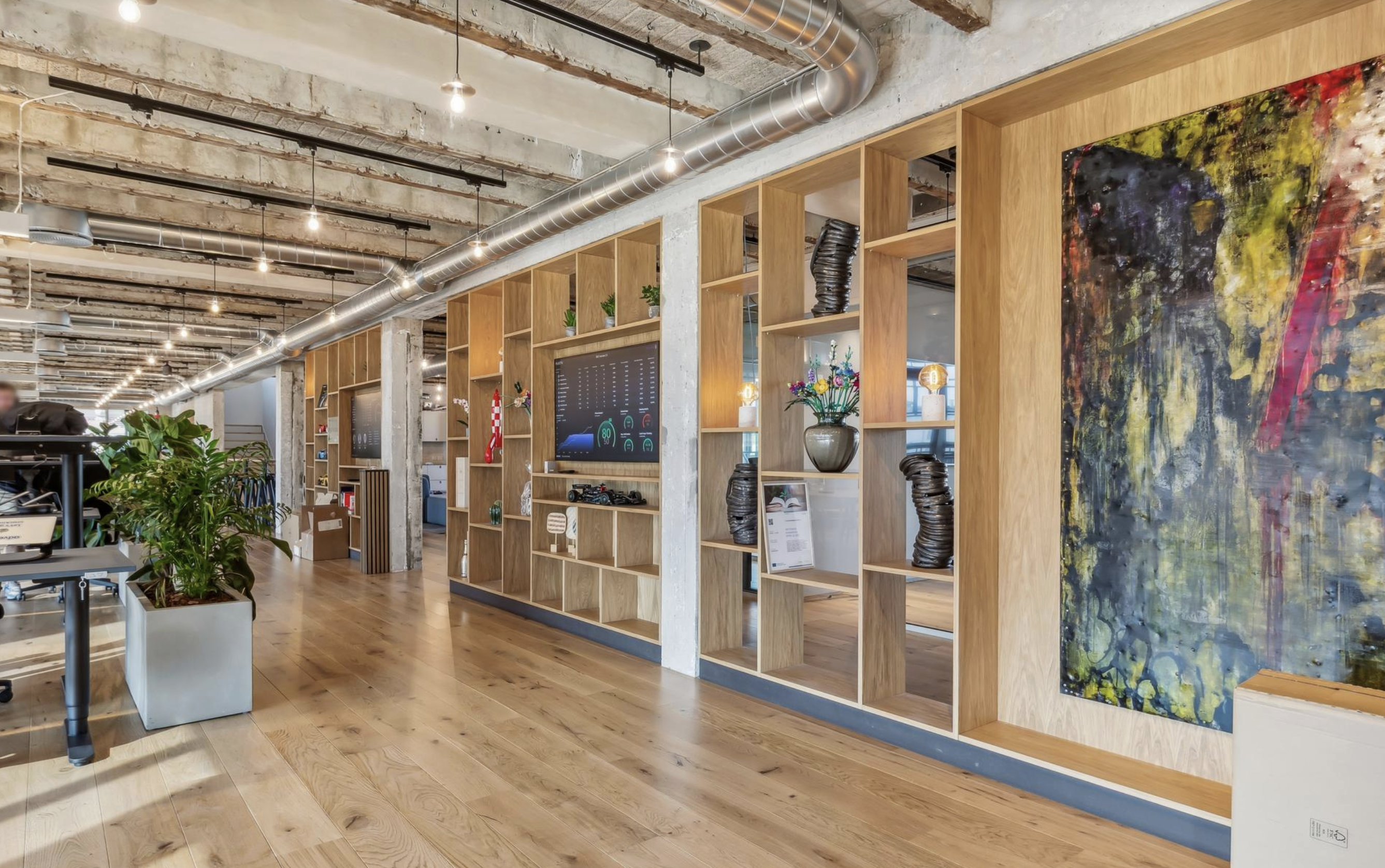
A key quality of the project lies in its retained structural framework. The building is executed as an in-situ cast concrete column-and-slab structure — cast on site rather than assembled from prefabricated elements. This provides not only functional advantages, but also a particular structural coherence and weight. For precisely that reason, the primary structure is not concealed, but staged as an active part of the building’s new identity.
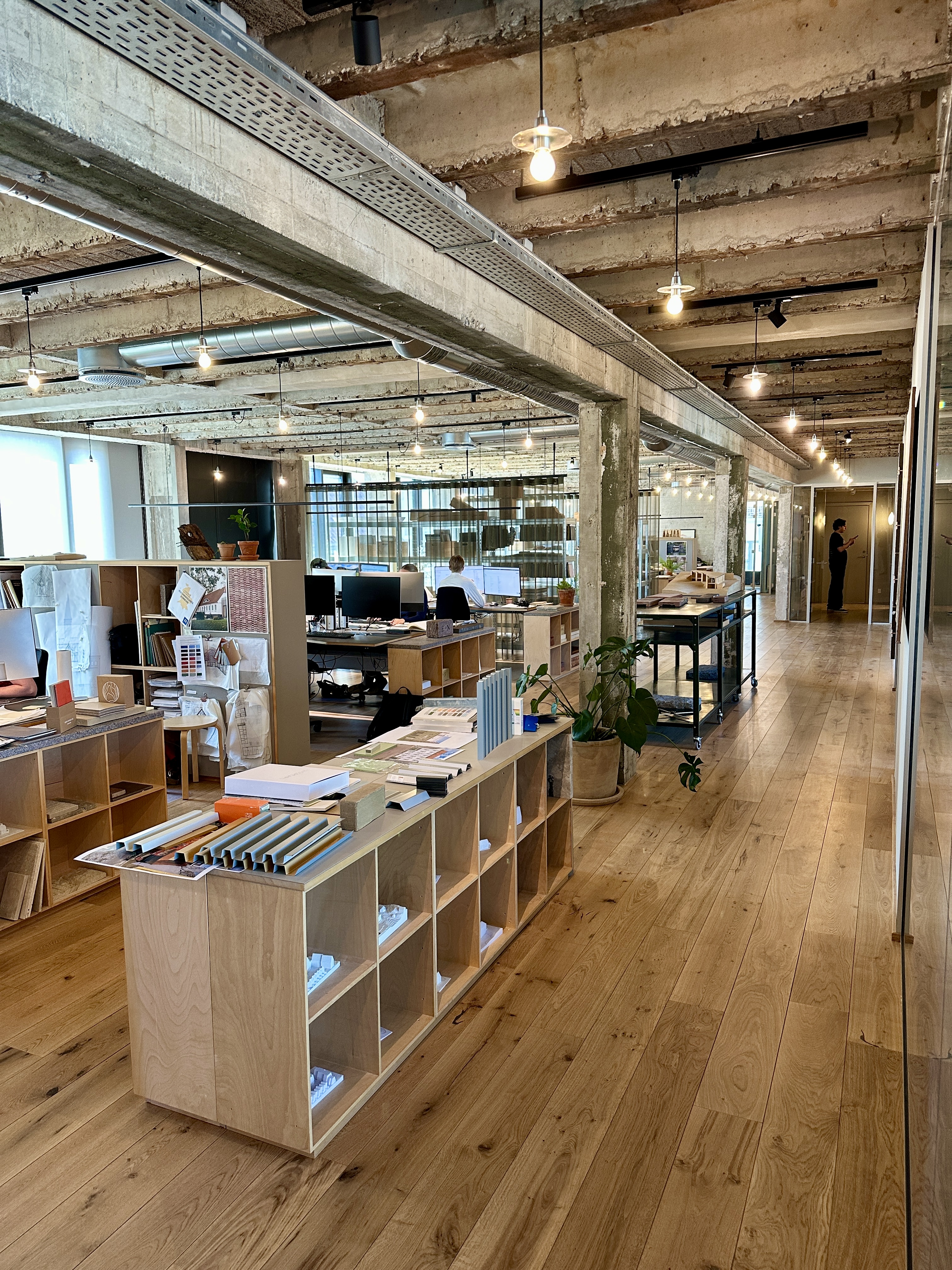
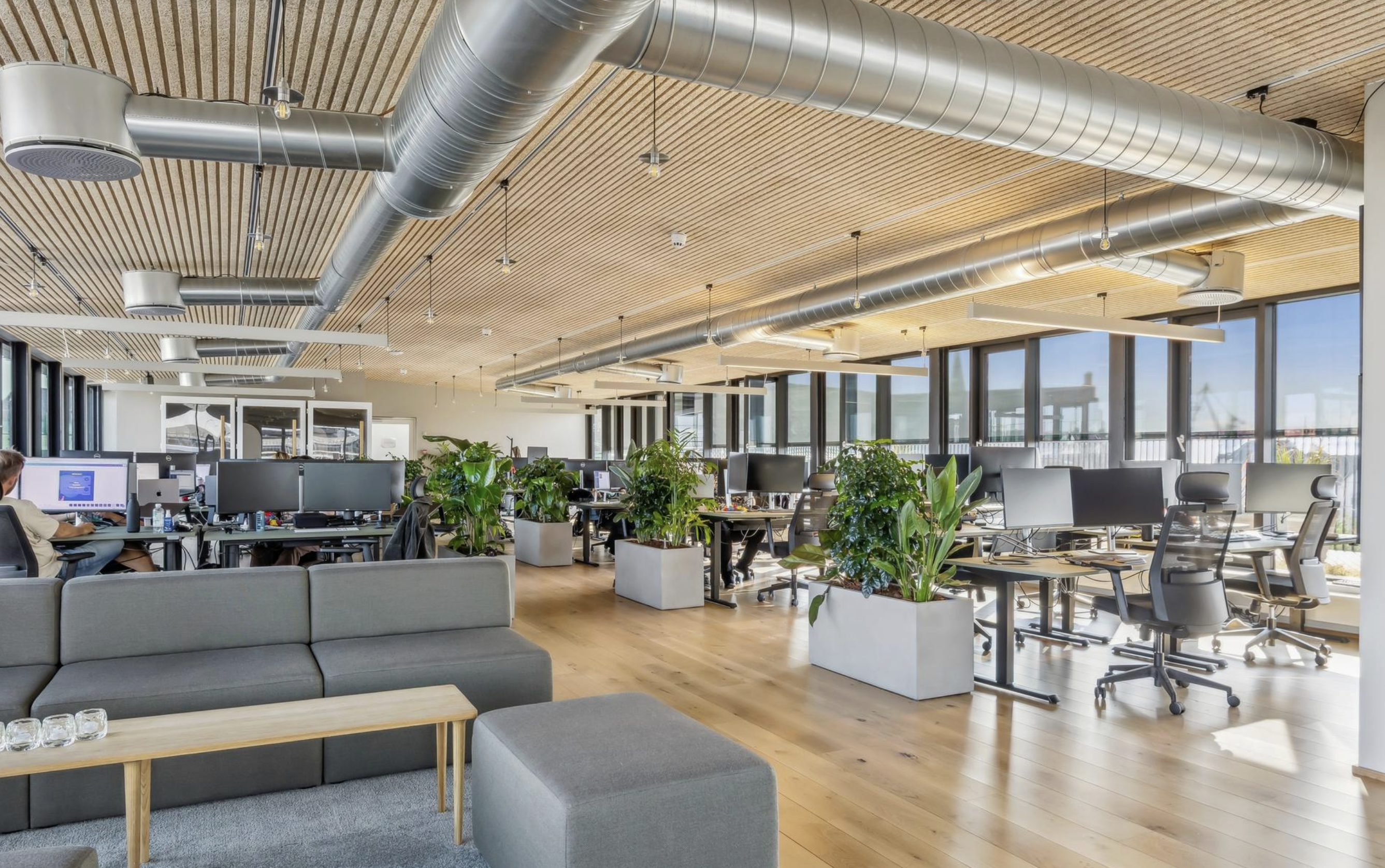
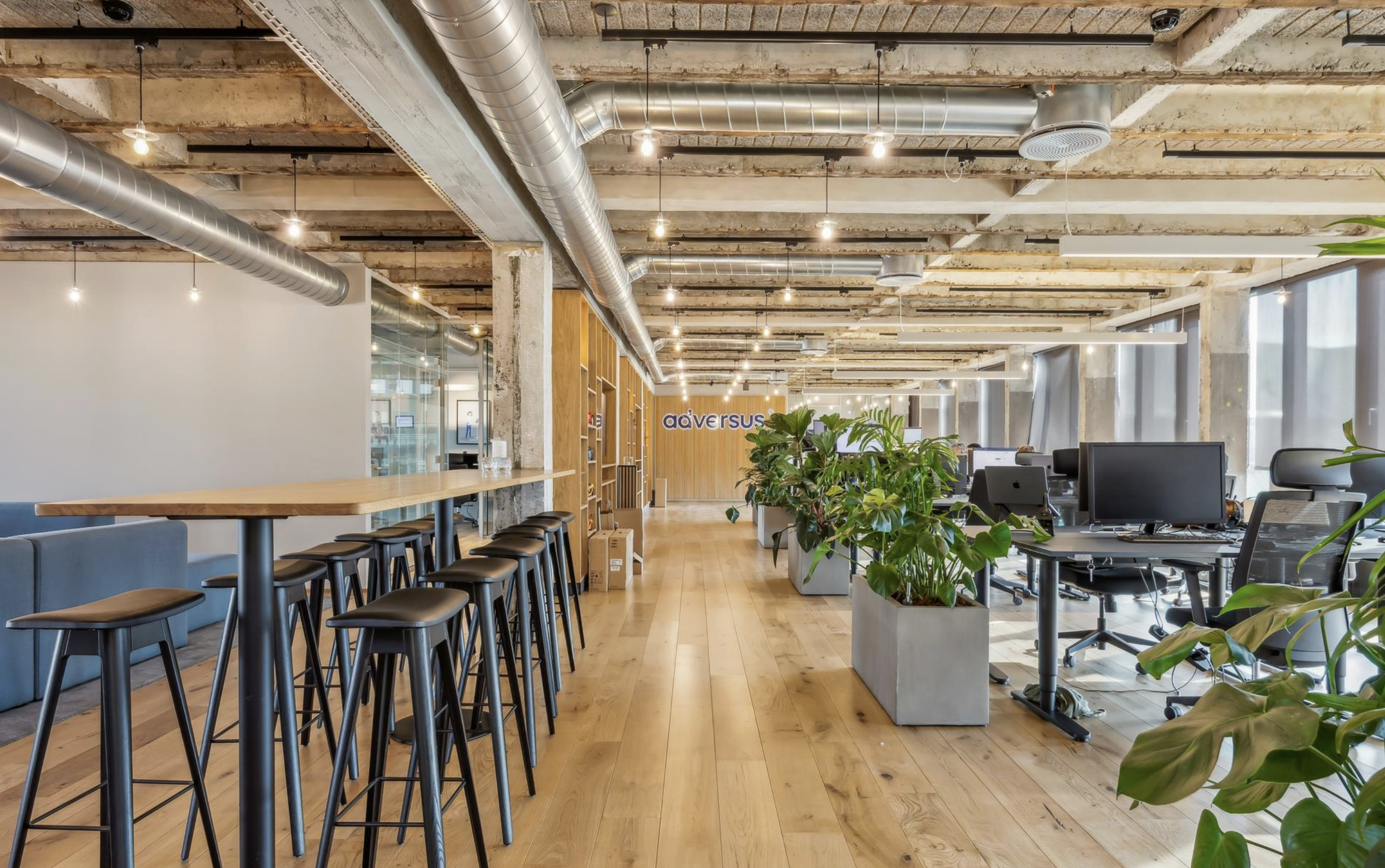
Inside, the ceilings have therefore been left exposed across large parts of the building, allowing the original concrete structure to come forward. This gives the spaces greater height, more material presence and a more immediate sense of the building’s character. The raw concrete does not read as unfinished, but as an honest architectural account of the building’s construction, age and craftsmanship. Elsewhere, timber ceilings introduce warmth and calm. Together, concrete and timber create a balance between robustness and sensoriality.
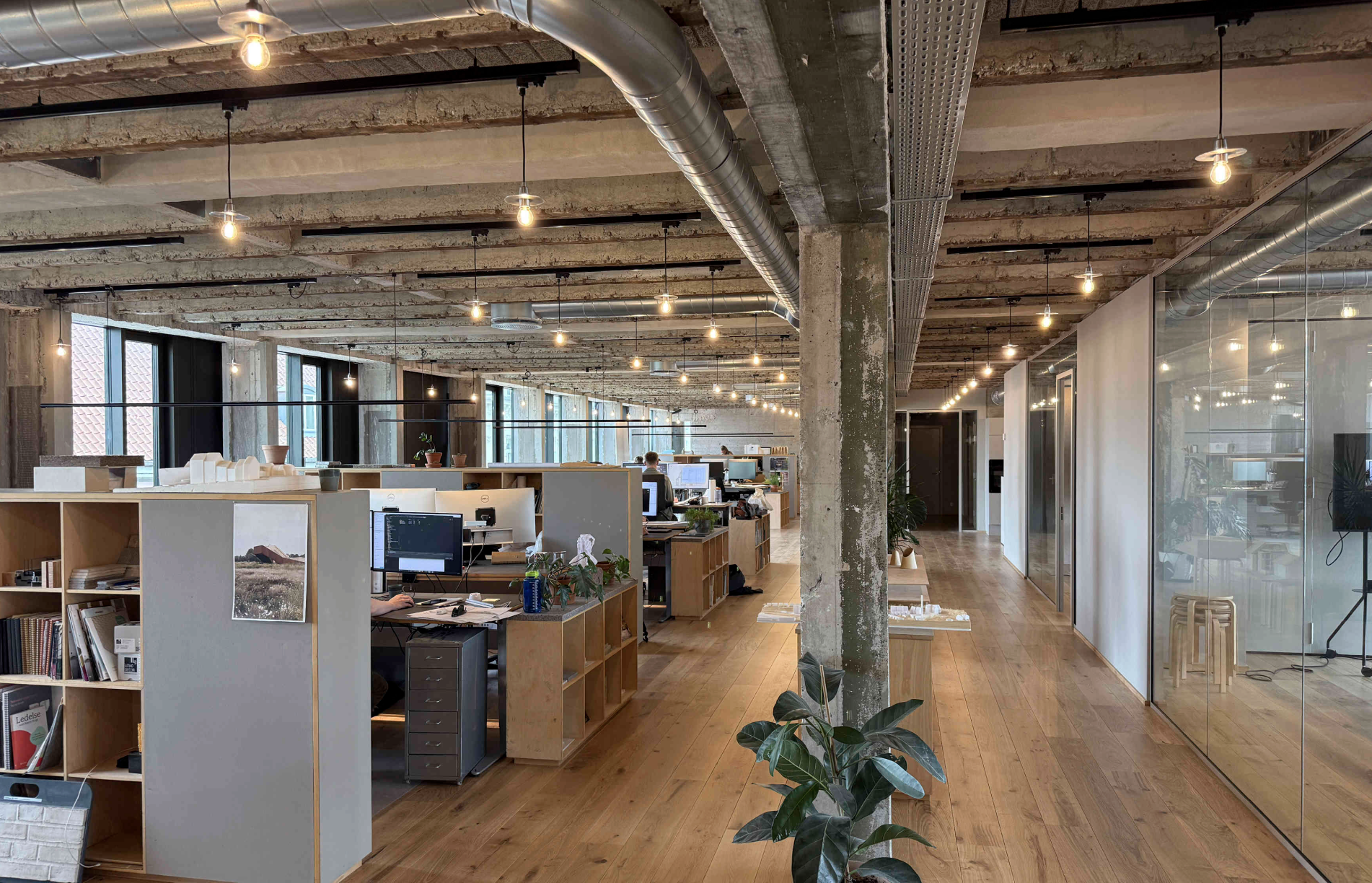
Lighting plays a decisive role here. Where office lighting was once treated primarily as a technical necessity, light is here conceived as an integrated part of the architecture. E+N Arkitektur have chosen a solution in which the general lighting does not merely illuminate work surfaces, but also shapes space and atmosphere. The simple Scan pendants, with their warm light sources, form a calm luminous ceiling that lifts the rooms, reinforces the materiality of the surfaces and lends the interior a human warmth.
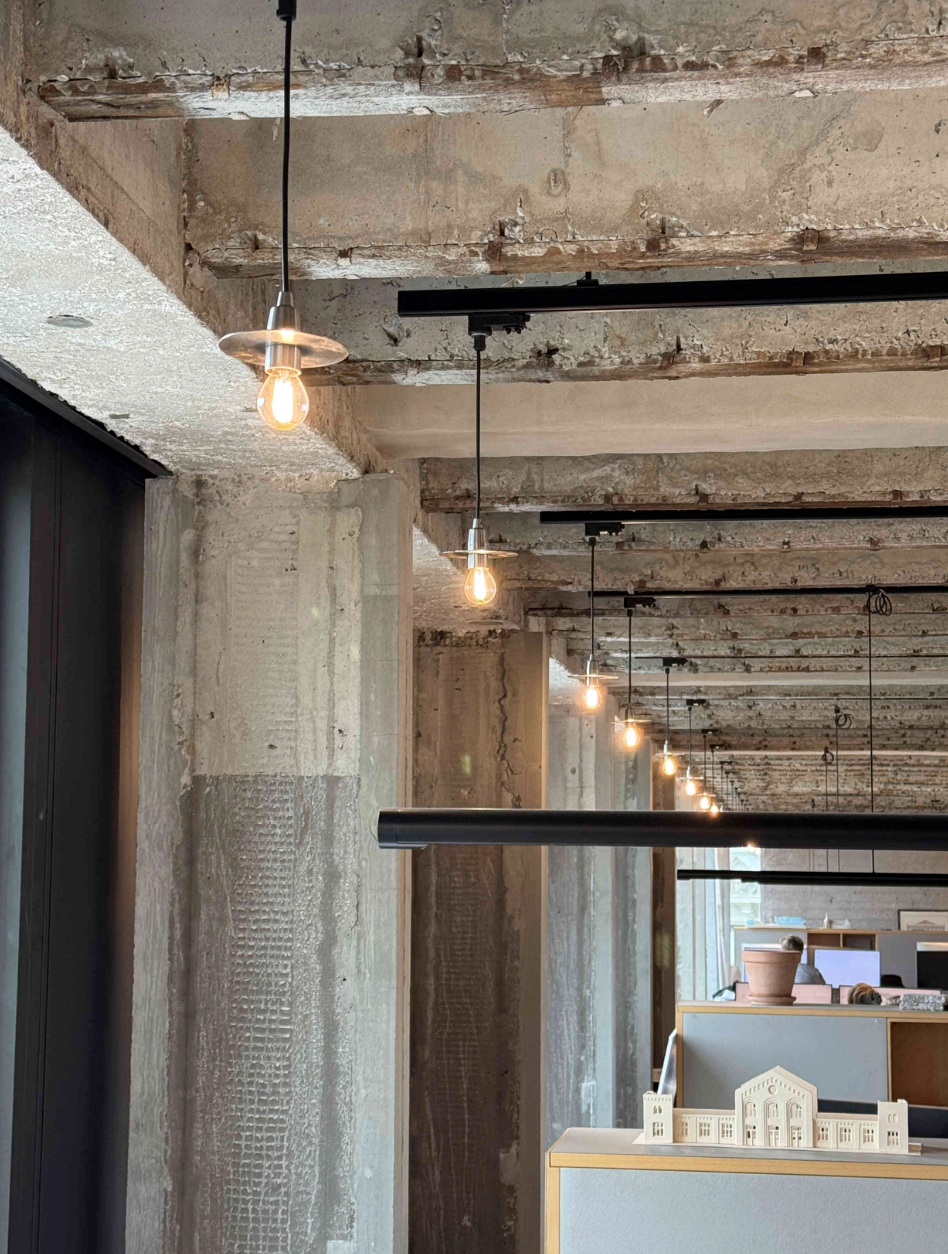
It is precisely in the meeting of structure, materials and light that the transformation finds its particular strength. The weight of the concrete is not denied, but softened and activated. The lighting brings out the character of the spaces without dominating them, and the interior acquires an identity that is both precise and welcoming. The former bank building’s closed efficiency has given way to a more sensuous and humane spatial experience.
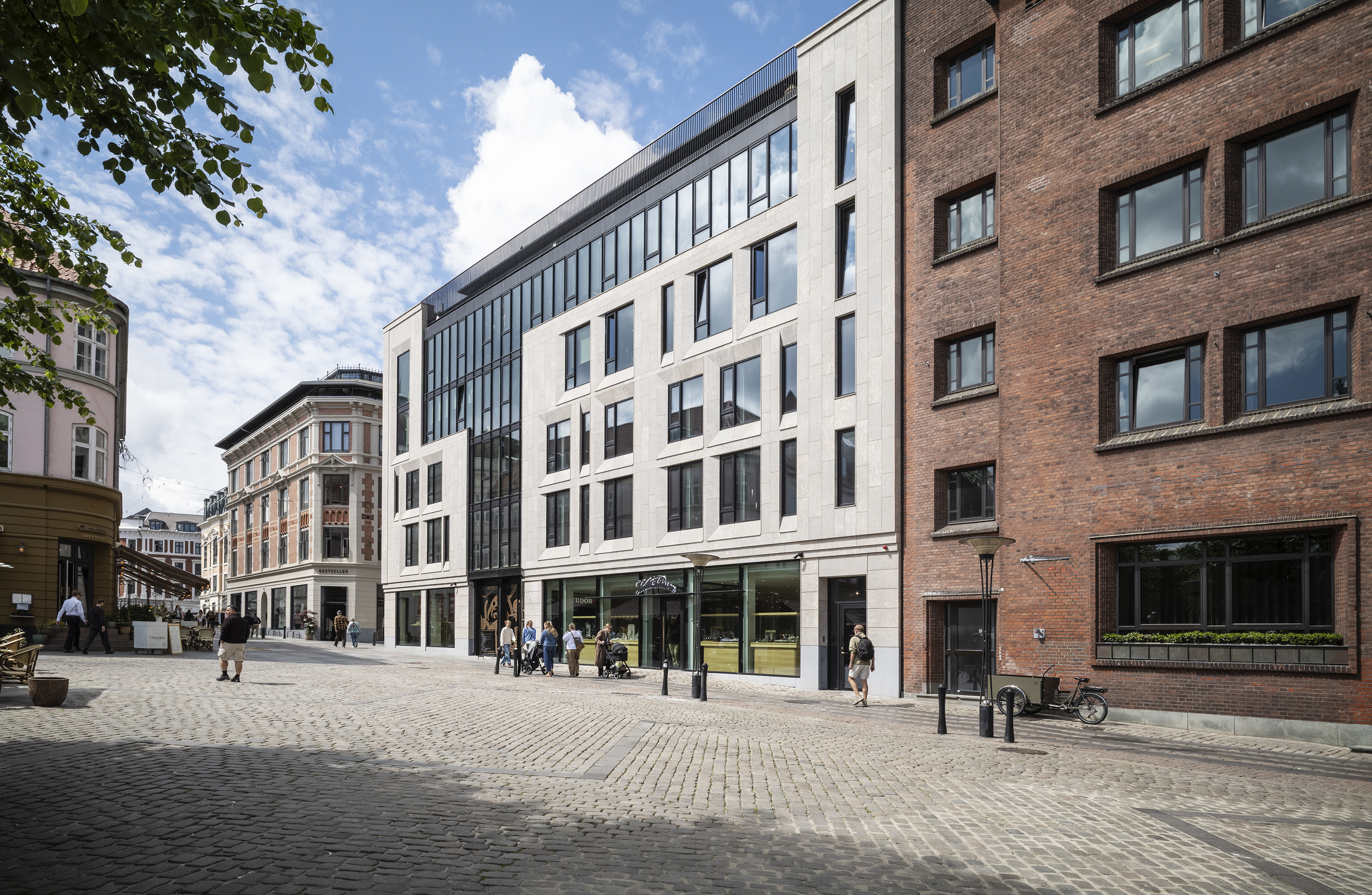
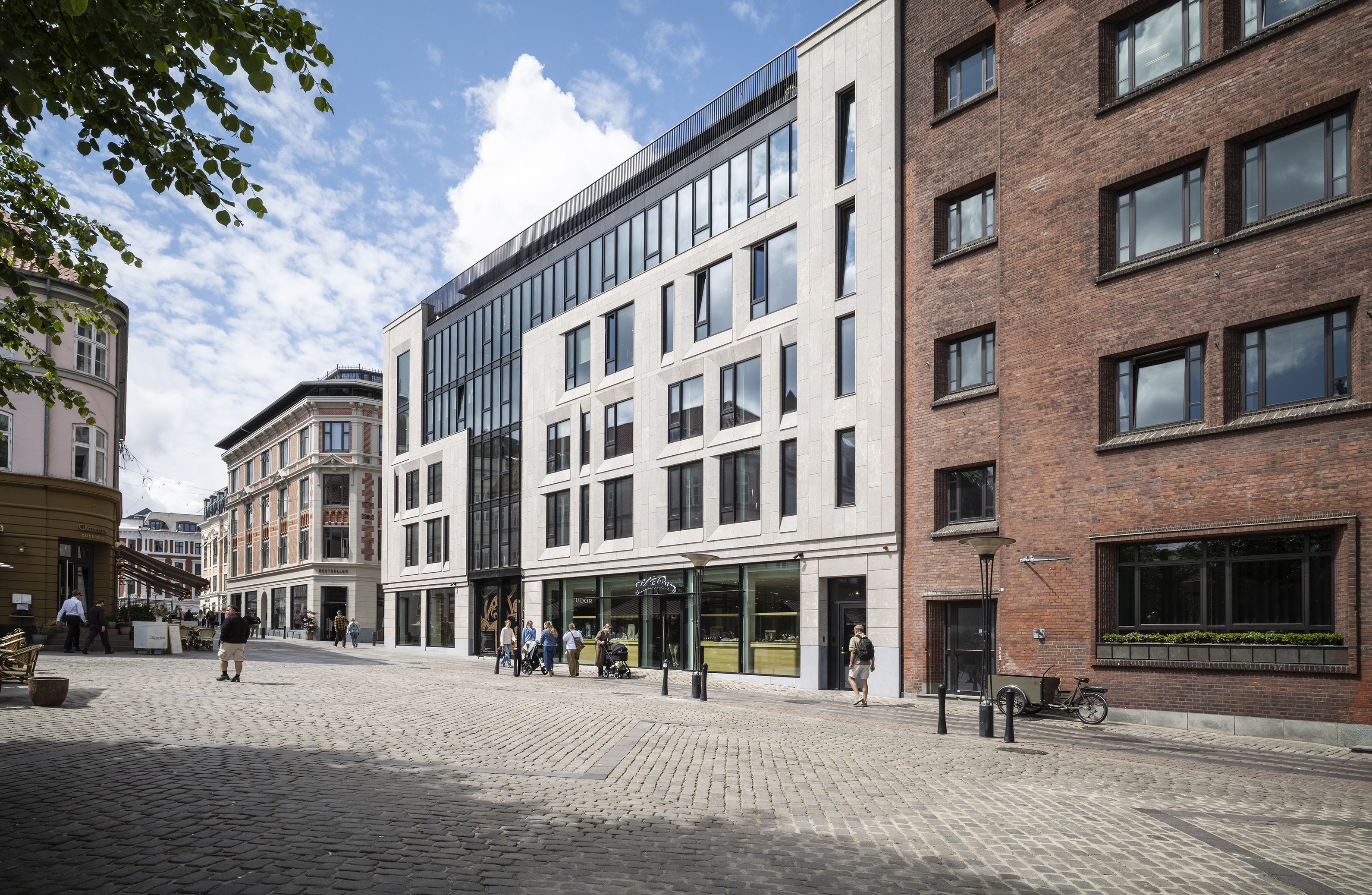
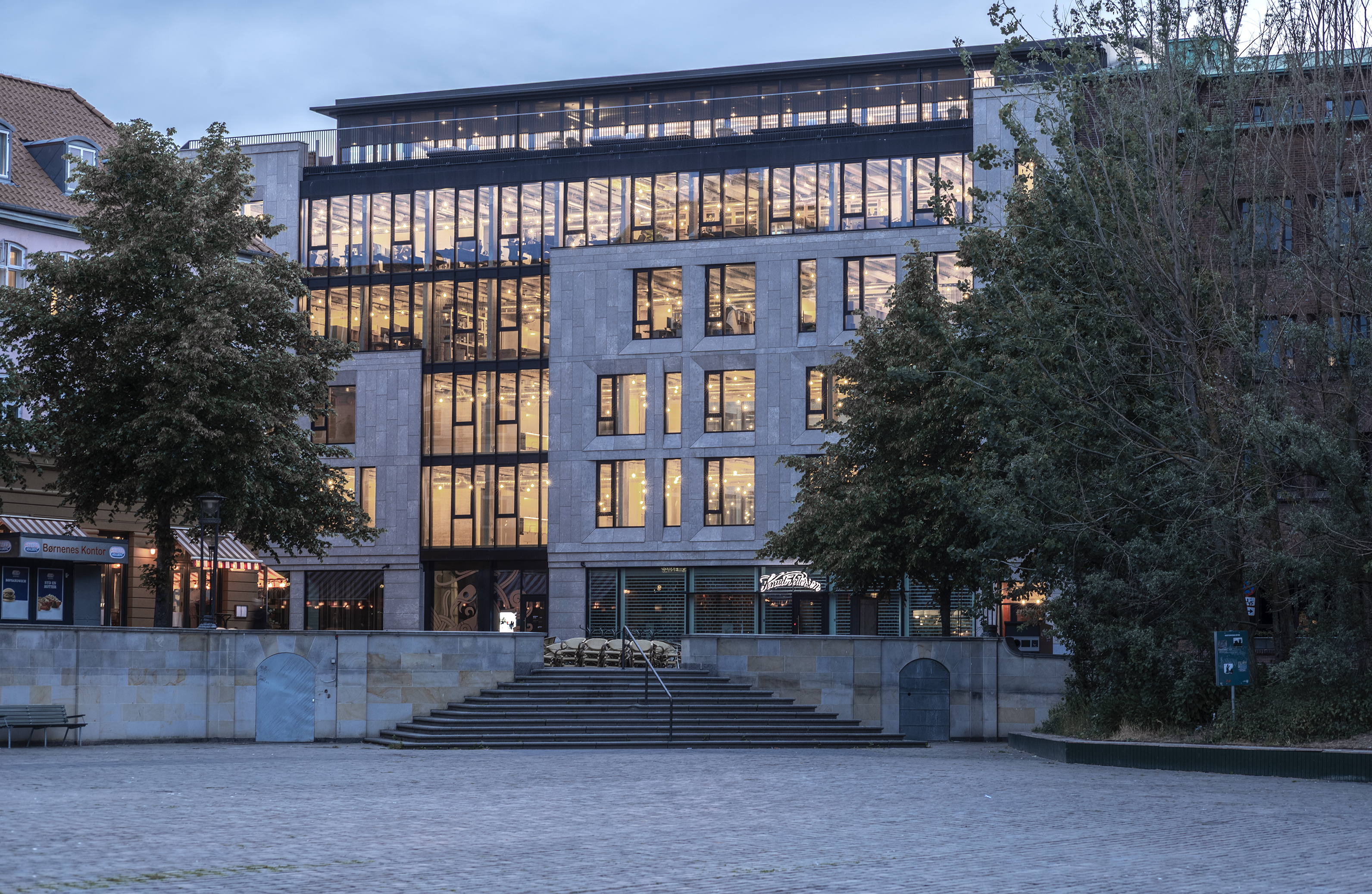
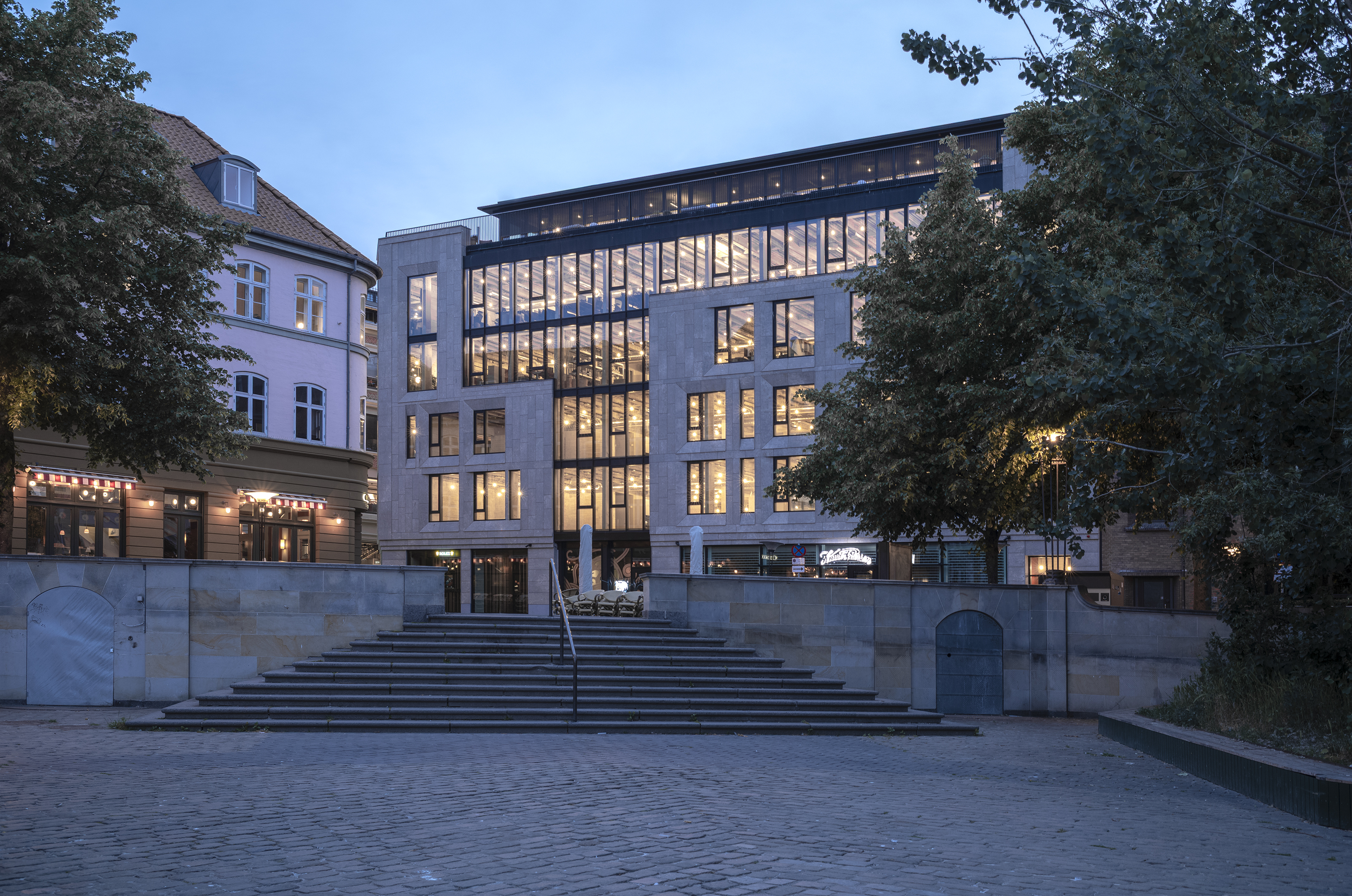
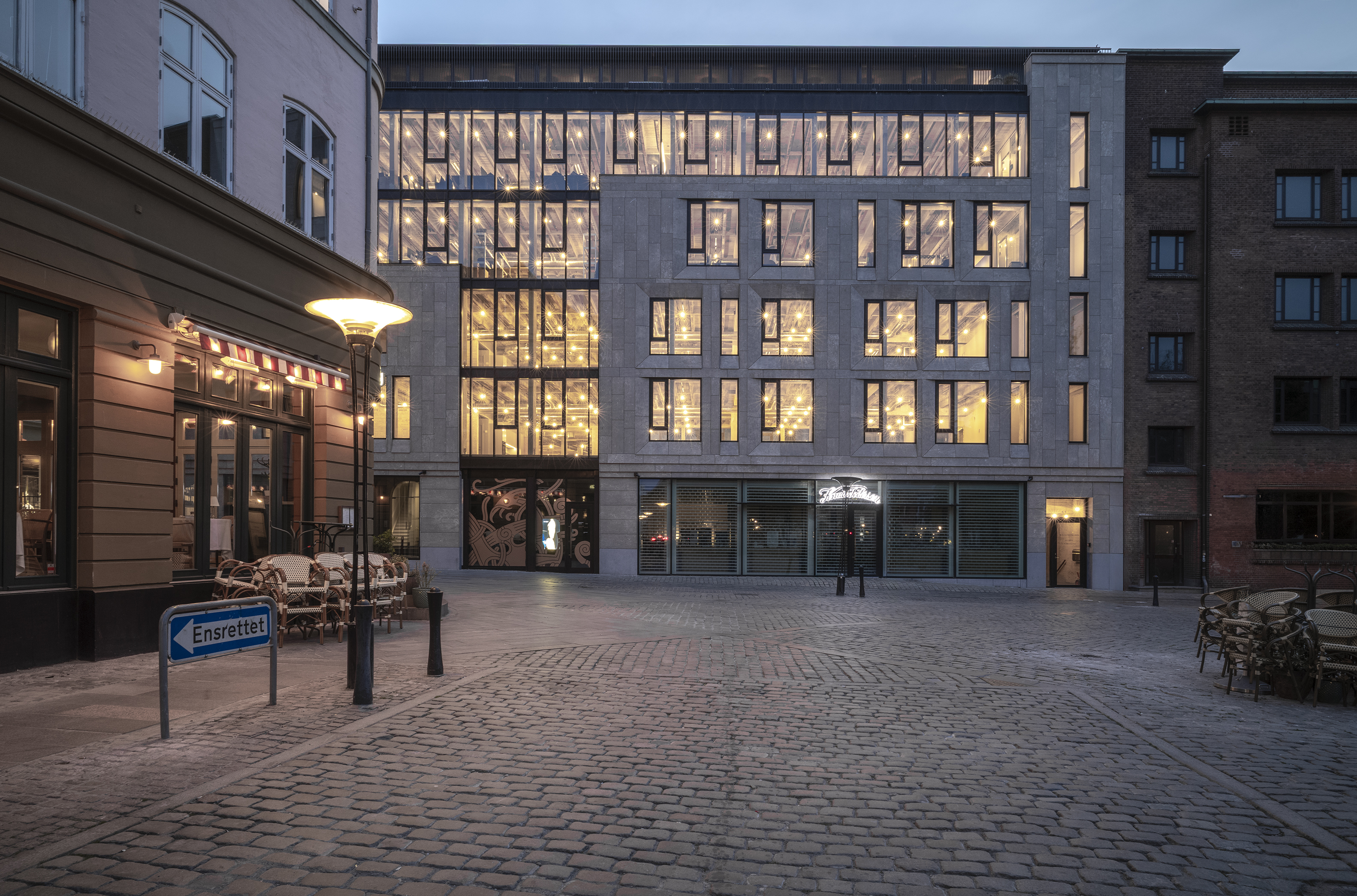
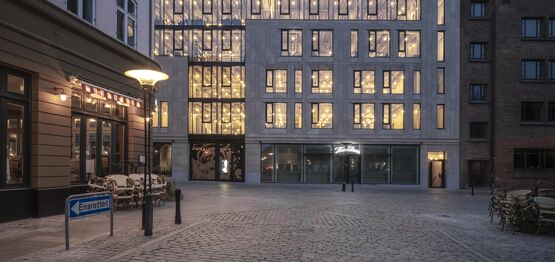
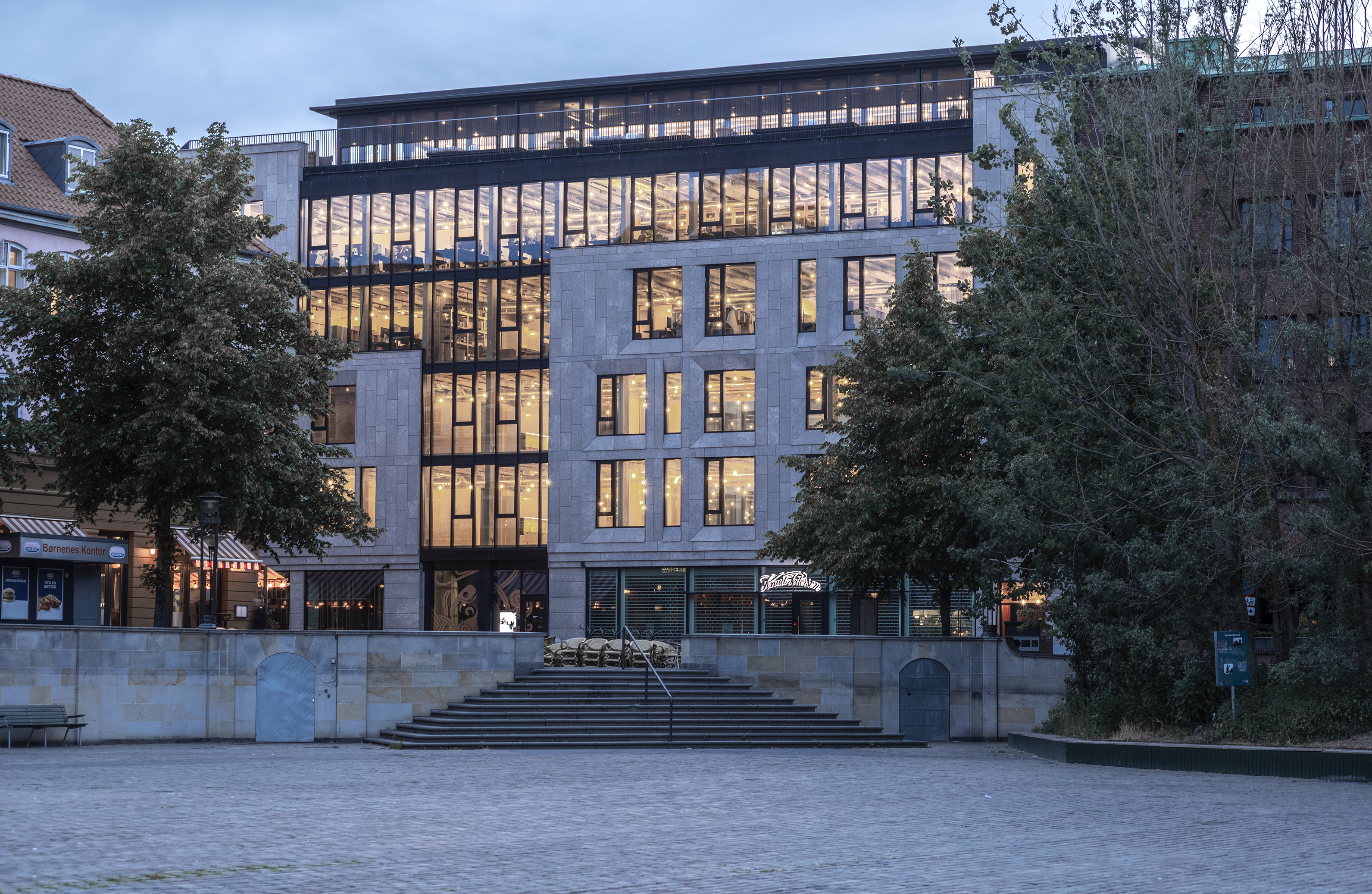
This internal transformation is closely tied to the façade’s new role. The façade has not only been reworked to bring the building into closer dialogue with its context on Skt. Clemens Torv, but also to open the house towards the city. The windows become more than openings; they become frames for the building’s inner image. Through the glass, one can read the light, the materials and the atmosphere of the rooms, without the house losing its gravity or character.
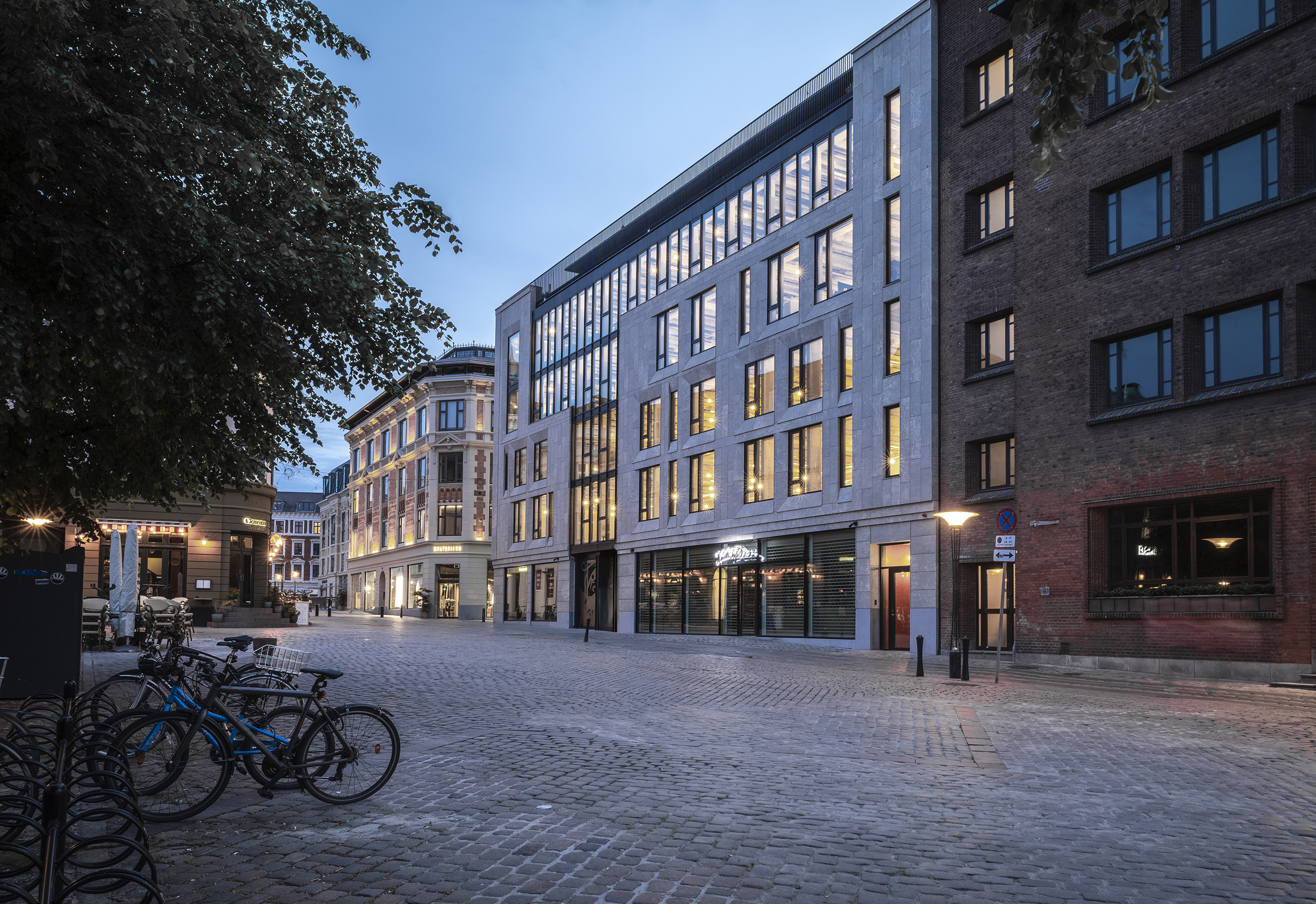
This is particularly evident after dark. Here, the interior lighting becomes an integrated part of the building’s exterior architecture. The light behind the windows is not only for those inside; it becomes part of the building’s communication with the city. It gives the façade a new presence and animates the house in a calm and precise way.
Skt. Clemens Hus is therefore not merely a renovation, but a true transformation. A former bank building, once closed and inward-looking, has become a house in dialogue with its surroundings — a house in which interior and exterior, existing and new, work together to create a more open, sensuous and humane architecture.
Photo: Outdoor: Helene Høyer Mikkelsen. Interior: E+N Architecture